Posts Tagged ‘religion’

The Book of Mormon Musical

Monday, April 25th, 2011

The media has spent a lot of time on the Book of Mormon Musical, a Broadway production people either love or hate. The reviews have often demonstrated the biases of the reviewers. One rejoiced that the musical showed that religion believes in a lot of silly things (not just Mormonism, but all religion). Another suggested the message was that blind faith is a sin, with his unspoken message being that religious faith is always blind. A Jewish writer argued that Jewish people, with their great knowledge of the dangers of religious persecution, should speak out loudly against the musical. Other writers have noted that the musical attacks all religions, even though it focused on only one. Some have noticed it is an inherently vicious portrayal of Africans, mocking their poverty and suffering.

The official statement of The Church of Jesus Christ of Latter-day Saints was a single sentence:

“The production may attempt to entertain audiences for an evening, but the Book of Mormon as a volume of scripture will change people’s lives forever by bringing them closer to Christ” (Church Statement Regarding The Book of Mormon Musical, 07 February 2011).

Michael Otterson, the managing director of the Mormon’s Public Affairs Department, wrote a less official personal response to the musical for the Washington Post. There he explained he would not be seeing the Book of Mormon Musical. “But I’m not buying what I’m reading in the reviews. Specifically, I’m not willing to spend $200 for a ticket to be sold the idea that religion moves along oblivious to real-world problems in a kind of blissful naiveté.” The Mormon Church’s official statement along with other LDS news and events can be found at the LDS Newsroom.

Brother Otterson took an interesting approach to the topic. He learned it took seven years to create the musical that made fun of African suffering. He wondered what the Mormons were doing in those seven years. Were they ignorant of real-world problems and suffering? He quickly learned Mormons weren’t making fun of Africans during those seven years. They were working diligently to resolve some of the hardships the musical mocks. In Africa, Mormons were bringing clean water to four million Africans who had never had it, providing wheelchairs for 34,000 children, vaccinating millions of children, training 52,000 Africans to resuscitate newborns, and providing emergency supplies to 20,000 people in flooded Niger. In the long run, who had the most important impact on the world in those seven years?

The world has protested the desecration of sacred Muslim texts, as they should, but the same outcry has not really been present for the desecration of sacred Mormon texts through crude language and portrayals in the musical. Mormons have a great respect for sacred things—our own and the sacred things of others.

A Mormon instructor once explained how Mormons could show respect for people of other faiths. He wrote:

“We can treat things that are sacred to them with respect. The yarmulka of an orthodox Jew, the crucifix or rosary of a Catholic, the icon of a Greek Orthodox, the shrines and temples and sacred places of other faiths—we can treat all these things with the tolerance of heart we desire people to have for our way of life. This does not mean that we need to adopt their religious practices: but it does mean that we should not treat lightly these things or their use of them. “

He also suggested, “We must never ridicule another person’s manner of worship. Many of our practices may seem strange to him, too! Though we may disagree with another person’s form of worship, we ought not to make light of it or criticize him for it. For these things represent other people’s sincere efforts to worship God, and though we may make every reasonable effort to give them a fuller understanding in the appropriate setting, these methods of worship are still the outgrowth of the individual’s sincere faith.” (See Gerald E. Jones, “Respect for Other People’s Beliefs,” Ensign, Oct 1977, 69.)

There are some who have suggested Mormons need to see the musical in order to evaluate it. Most people study reviews prior to deciding how to spend their money and reviews make it clear Mormons who practice strict obedience to the commandments and the teachings of the prophets will be unwilling to see the musical. This is not just because of its attacks on Mormons, religion, and Africans, but also because the language and content are labeled vulgar even by those who liked it.

Mormon teenagers are given a pamphlet that outlines the moral standards a good Mormon will follow. It has been made clear these standards are not just for teens—they are for everyone. Concerning media and entertainment choices, Mormons are taught:

“Whatever you read, listen to, or look at has an effect on you. Therefore, choose only entertainment and media that uplift you. Good entertainment will help you to have good thoughts and make righteous choices. It will allow you to enjoy yourself without losing the Spirit of the Lord.

While much entertainment is good, some of it can lead you away from righteous living. Offensive material is often found in web sites, concerts, movies, music, videocassettes, DVDs, books, magazines, pictures, and other media. Satan uses such entertainment to deceive you by making what is wrong and evil look normal and exciting. It can mislead you into thinking that everyone is doing things that are wrong.

Do not attend, view, or participate in entertainment that is vulgar, immoral, violent, or pornographic in any way. Do not participate in entertainment that in any way presents immorality or violent behavior as acceptable,” (“Entertainment and the Media,” For the Strength of Youth: Fulfilling Our Duty to God, (2001).

From this and other statements, it is easy to discern why good Latter-day Saints simply cannot attend a musical in which “vulgar” is the one word every reviewer uses to describe the script. Mormons subscribe to what are called the Articles of Faith, a statement of thirteen basic beliefs. The last one ends with the following sentence: “If there is anything virtuous, lovely, or of good report or praiseworthy, we seek after these things.” Conversely, then, Mormons avoid anything that is not virtuous, lovely, or of good report or praiseworthy.

How Do Reason and Faith Work Together?

Wednesday, April 29th, 2009

The intellect is very important. God gave it to us and expects us to use it. We can take it with us when we die and the knowledge we gain in each stage of life will also go with us. However, the intellect is not the most important part of us, nor is it the source of absolute knowledge of truth. (more…)

Does Religion Take Away Your Agency?

Tuesday, March 17th, 2009

This is a common misconception about religion. Mormons teach that each person is given agency to choose for himself how to live. Mormon beliefs begin the story of life prior to birth, when God created each of us as a spirit. We lived with Him, learning, developing our character and personality, and practicing making choices, until the time came to come to earth. At that time, we were, as always, given our agency. We could choose to come to earth with Jesus as our Savior. If we made this choice, we would continue to have agency and some would use it unwisely and be unable to return. God would send a Savior to do that part we couldn’t do for ourselves. This Savior, Jesus Christ, would take on the sins of the world and die for them.

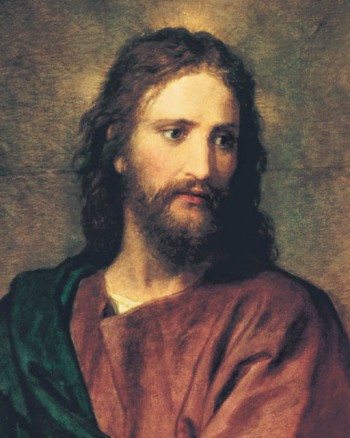
Jesus Christ MormonThe other choice was to follow Lucifer. Lucifer wanted to take away our agency and send us to earth as puppets, with himself as the puppet master. He would control our every thought and action, and we’d live perfect lives, but for no purpose. Some were uncomfortable with the idea of continued agency, and rejected it. They preferred to stay with Satan and allow him to do their thinking for them. Those who followed Lucifer elected to give up their agency and were denied a chance to come to earth. They could not live here without agency.

The Mormon religion allows us to maintain control over our lives. Mormons teach that each person is required to find out for himself if the Mormon religion is true. While a very young child might believe simply because his parents believe, the child is taught, before he is eight years old, to begin deciding for himself. At age eight, he can be baptized, and before this happens, he is to learn his religion and to pray to know if it’s true.

This process is often repeated several times, as the child grows up and gains a stronger ability to recognize the promptings of faith. The pattern was set for us by Joseph Smith, the first Mormon prophet of modern times. He wanted to know which church to join, and after reading in the Bible that God would tell him, he went into the woods to ask God. Both God and Jesus Christ came to him to answer His question.

Most of us won’t get that type of answer, but we can receive an answer to our prayers, just as Joseph Smith did.

Does joining a church force you to give up your right to think for yourself? Of course not. Because each member of the church is taught to find out for themselves if the church is true, they are making an informed decision. Even after making this overall choice, if they learn something they’re not sure about, they can pray about that specific doctrine as well.

If your mother taught you not to touch a hot stove, and you obey, have you given up your right to think for yourself? No, because you are still free to touch the stove, as long as you’re willing to accept the consequences. You’re simply choosing to do what you know is best for you. Mormons, and other who believe in God, are doing the same.

One example often given is that of the sonnet. The sonnet is a poem with a very strict structure. Within the strict structure, however, a great deal of originality is possible. There are millions of sonnets, all following the rules, but all unique.

Believing in God is comforting. It’s a safe and healthy comfort, unlike the artificial comfort brought about by alcohol, drugs, or other immoralities many people turn to when they are stressed or worried. People who believe in God know there is someone who loves them and knows them, who always has their best interests at heart, and who, while not taking away our personal agency, will help us if we ask for help.

A true religion asks a great deal of its members. The Mormon religion isn’t a passive one. Because it’s a lay church, each member works hard to help it function, serving as leaders, teachers, and givers of service. They are held to a high standard of behavior.

Giving up your right to think for yourself is seemingly easy (although in reality it isn’t.) People looking for an easy way through life aren’t interested in being Mormon. The moral standards are very high and, since Mormons live in the everyday world, not in a sheltered community, this means making sacrifices and fighting those who want them to lower their standards. They raise families, have jobs, do volunteer work, and are also taught to make the most of the talents they have been given. They must figure out how to do this on their own, given their unique circumstances.

Religion never promises to be easy. The Mormons expect people to work hard for their own happiness and well-being, using the gospel as a guideline, but making choices within those guidelines.

Is religion just opium for the weak?

Friday, August 8th, 2008

This question is related to Karl Marx’s famous statement that “Religion is the opium of the masses.” Marx also said, “Religion is the impotence of the human mind to deal with occurrences it cannot understand.” And again, “The first requisite for the happiness of the people is the abolition of religion.”

Salt Lake Mormon TempleIn an article written by Geoffrey Janes addressing this question, Janes insightfully said: “The basic idea is that God is some kind of spiritual narcotic that dulls our senses to the pain of the world and helps us to cope with it.” Quoting from a contemporary Polish poet, Janes went on to say, “Religion, opium of the people! The true opium of modernity is the belief that there is no God so humans are free to do precisely as they please.”Opium is a narcotic. “The term narcotic (ναρκωτικός) is believed to have been coined by Galen to refer to agents that benumb or deaden, causing loss of feeling or paralysis.” [Wikipedia]

Thus, opiates have two effects: 1) to numb pain, to do away with feeling; and 2) to make one powerless to move. Marx’s statements suggest that the populace is paralyzed when religion holds sway. He thinks people cannot make thinking, rational decisions or exercise volition, when religion influences them. He thinks people are lulled into believing in fairy tales, numbing their pain, but making them unable to sense what is really real and to act accordingly.

Having been physically paralyzed from the neck down for 19 years, I know how it is to have absolutely no feeling in any part of my body except for my face and the top of my head. You may think it a blessing not to be able to feel pain, but it really isn’t.

Our bodies, as created by God, were designed to experience pain to let us know that something is wrong and to move us to act. Although pain is not pleasant, it can be a blessing in urging us to seek immediate help to discover the source of the pain, take the necessary measures to alleviate it, and thus avoid more serious damage.

I believe that our spirits function in much the same manner. If we inject too much opium of disbelief into our systems it is also possible for our spirits to become paralyzed. When an individual is spiritually paralyzed he cannot “feel” the promptings that come from God through his conscience and is not aware that he is in great spiritual pain and perhaps in danger of an impending spiritual death. It is sin and pride that cause paralysis, and not true religion. Geoffrey Janes said, “The truth is something that cannot be changed. God does exist. He created us, not the other way around.”

From the beginning of time there have been individuals and entire nations that have become spiritually paralyzed by rejecting God. They have injected into their cultures the narcotic of disbelieving in a higher power and any system or code of ethics. It has had such a numbing effect on their spirits they have become “past feeling.” Crimes against humanity have been and continue to be committed by such individuals and nations, including indeed, the nations that have followed the philosophies of Karl Marx.

For months after my accident I came very close to being spiritually paralyzed as well as physically paralyzed. It was only by turning to God with all my heart and trusting in his goodness and love that my spirit was brought back to life. Darkness, gloom, and despair were replaced by light, warmth, and joy! No, religion is not the opium of the weak!”

Jack Rushton

www.cafepress.com/brainburst/3168797