Posts Tagged ‘Prayer’

150 Millionth Copy of Book of Mormon Published

Friday, April 22nd, 2011

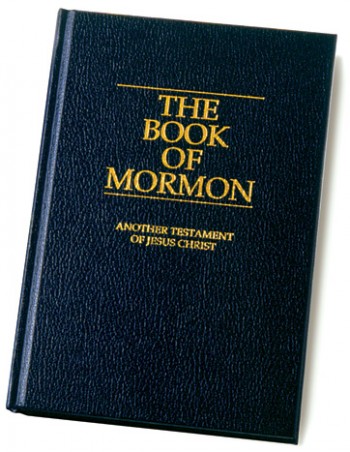
In 1830, the first copy of the Book of Mormon was published. Recently the 150 millionth copy was printed. Today, it is translated into 82 languages and is selections have been translated into 25 more languages.

book of mormonThe Book of Mormon does not replace the Bible for Mormons. It is used with the Bible and its purpose is outlined in the subtitle: “Another Testament of Jesus Christ.” In the Book of Mormon, we learn that a few small group of Jews were sent to the American continent by God. In just a brief time, the primary group, known as the Nephites, were forced to move away from another group, the Lamanites. The leaders of these two groups were brothers, but one was evil and one was a prophet of God. The Lamanites had as their goal to destroy the Nephites and all memory of them.

Throughout the generations, the Nephites had prophets, as did the people of the Old Testament. They learned that God loves all His children, not just those who lived in the Holy Lands at that time. They were even promised Jesus would visit them sometime after his crucifixion and resurrection, which He did. The wicked were killed and the righteous remained to greet their Savior. During this visit, the people learned of the Savior’s great love for them. Unfortunately, after a few generations, the children who had not been alive at this time stopped believing Jesus had ever really come or stopped caring what He had taught. They became progressively more wicked and again divided into two groups.

Eventually too many of the Nephites had forgotten the promises they had made to God. God had promised they could not be destroyed as long as they were righteous but the time came when there were few who were righteous. A great war ensued between the two groups and large numbers of people were killed, with the greatest number on the side of the Nephites. The Lamanites continued to hunt down and kill the surviving Nephites until there was only one man left, a teenage boy named Moroni. He was the son of the prophet Mormon, who had been commanded by God to begin abridging the records each prophet had left behind and handed down from prophet to prophet. When he died, Moroni, now the only righteous person in his personal world, went into hiding and finished the project. He was in constant danger of being murdered as the Lamanites continued to search for him. So bloodthirsty they could not stop fighting when their enemies were dead, they were now killing each other, but they were anxious to finish off the remaining Nephite.

Once Moroni finished the editing, he hid the book and left the area. He returned after a time, briefly, and added more to it. We don’t know what happened to him after that. He did report that the Lamanites were still fighting, so it is likely they became a fairly small population by the time their internal wars ended.

The purpose of the Book of Mormon is to testify of Jesus Christ. It refers to Him and to His ministry more often than does the Bible. It contains many of the great Biblical themes: grace, atonement, charity, service, faith, and repentance, for example.

Following are a few verses from the Book of Mormon that relate critical doctrine:

8 And he shall be called Jesus Christ, the Son of God, the Father of heaven and earth, the Creator of all things from the beginning; and his mother shall be called Mary (Mosiah 3:8).

For we labor diligently to write, to persuade our children, and also our brethren, to believe in Christ, and to be reconciled to God; for we know that it is by grace that we are saved, after all we can do (2 Nephi 25:23).

26 And we talk of Christ, we rejoice in Christ, we preach of Christ, we prophesy of Christ, and we write according to our prophecies, that our children may know to what source they may look for a remission of their sins. (2 Nephi 25:26)

26 And after that he came men also were saved by faith in his name; and by faith, they become the sons of God. And as surely as Christ liveth he spake these words unto our fathers, saying: Whatsoever thing ye shall ask the Father in my name, which is good, in faith believing that ye shall receive, behold, it shall be done unto you (Moroni 7:26)

The Book of Mormon came into our modern lives through Joseph Smith, the first prophet of modern times. God often said in the Bible He would do nothing but through the mouth of His prophets. There had been brief (from an eternal standpoint) periods of time in which prophets were withdrawn from the earth due to the refusal of God’s children to listen to them and to obey them. But always God returned the prophets to the earth. In these final days, as we prepare for the Second Coming, we can look around and see there has never been a greater need for a prophet. It is clear people are confused about what is true and what is not. Without a prophet like Noah or Moses to guide them, it can be very difficult to stay the course. God loves us too much to let us flounder when the stakes are high.

With this in mind, God called Joseph Smith to be the first prophet in modern times. He was shown the location of the Book of Mormon by Moroni himself, now an angel. The Bible often refers to angels and they are an essential part of God’s work. Moroni tutored Joseph until he was ready to receive the plates on which the book was recorded. Although at the time no one had ever heard of records being kept on metal plates in ancient times, today archaeologists have indeed found such records.

When the Book of Mormon was published, the church was officially restored. Mormons would read both the Bible and the Book of Mormon to gain a greater understanding of God’s work and the Savior’s mission. Over the years, the Book of Mormon has been loved and read by many, named among the nation’s most influential books even by organizations not associated with the Church.

How did this book, whose power to change lives, come to be accepted as scripture by so many people? The Bible has had the gift of time. We are more inclined to accept the old, even when there is insufficient proof. For instance, many “experts” believe Abraham never existed because the story doesn’t fit the facts as they have determined them. And yet, Christians accept the reality of Abraham even without physical proof. We don’t need proof. God said Abraham existed and we trust God.

The Book of Mormon, although newer, also requires a measure of faith. The Bible tells us how to find out if it is true. In James 1:5, James told us if we lack wisdom, we can ask God with faith and pure intent and He will answer our question. With this promise, we can know the Bible is true. The Book of Mormon offers a similar promise. In Moroni 10:4, near the end of the book, Moroni promises that if we study the book with pure intent and a sincere desire to know if it’s true, we can pray and receive an answer to our request to know.

Mormons are taught to put this to the test. Most Christian churches don’t require their members to pray about the Bible prior to joining their church. Mormons teach even their young children that they are to pray to know if the scriptures are true and if the church is true. Before baptism, they are asked about the results of this inquiry by their leaders. Each member of the Mormon church is expected to gain a personal testimony of the Book of Mormon and the Bible, rather than trusting the words of others.

The Book of Mormon has reached such a high level of readership because so many people have put the book to the test and received confirmation that it is true. It has withstood all its critics, all those who mock it, and all those who discount it and has continued on to give people what is often their first testimony of Jesus Christ.

What Commandments Do Mormons Keep?

Wednesday, June 3rd, 2009

mormonMormons are sometimes known as belonging to a church with a lot of rules. While it might seem like there are a great many of them, they are generally very basic rules of decent life. They were taught by the Savior during His ministry on earth, and those that were revealed in the latter-days are those that keep us safe, happy, and mora

The Book of Mormon teaches that men are that they might have joy. (See 2 Nephi 2:25.) The Savior, Jesus Christ, gave us commandments that, when practiced for the right reasons in the right spirit, would allow us to live a joyful life even in times of trials. (more…)

How Do Mormons See Revelation?

Wednesday, May 13th, 2009

Revelation is how God communicates with us, His children, while we’re away from His presence. There are many different levels of revelation and many different ways it can be received.

Pres. Thomas S. Monson MormonNo one may receive revelation for a level of gospel structure higher than the one he is called to carry out. For instance, a child who is trying to decide how to overcome his struggles in math class can receive personal revelation to help him with that problem. A mother can receive revelation to help her understand how to care for her children. A leader who oversees the program for teenagers at church can receive revelation to help her know how to best serve the youth in her program. A bishop (the Mormon equivalent of a lay pastor) can receive revelation about how to best meet the needs of his congregation. Each person may receive personal revelation related to his or her own responsibilities in life.

However, only the prophet may receive revelation for the entire church, since that is his sphere of

responsibility alone. Since the very beginning of time on earth, God has utilized prophets to receive and share His messages to His children:

Surely the Lord God will do nothing, but he revealeth his secret unto his servants the prophets. (Amos 3:7)

Revelation is not fortune telling. When Mormons receive revelation from their prophets, it is always about matters critical to eternal salvation, and is predicated on the behavior of the people of the world-not just the Mormons. For instance, when Noah was told to warn the people to repent or they would be destroyed, the warning was sincere and they were given a way to be protected. As a people, they could repent and the storm would not begin. Or some of them could repent and help to build the ark, which would hold anyone who chose to sincerely repent-before the rain began to fall. They chose to do neither, and so they were destroyed. Noah, because of his righteousness, and his family because of him or because of their own worthiness, was saved.

Personal revelation is available to every person who lives on earth and chooses to do what is necessary to receive it. It is not open only to members of God’s church. Those beginning their journeys can rely on the Spirit of Christ and periodic counsel from the Holy Ghost. Later, those who have been baptized and confirmed by a person who has authority from God may receive the gift of the Holy Ghost to be with them at all times, as long as they’re living righteously.

LDS.org, the official website for the Mormons, offers these steps to help people prepare to receive personal revelation:

Pray for guidance. Be reverent. Be humble. Keep the commandments. Partake of the sacrament worthily. Study the scriptures every day. Take time to ponder. When seeking specific guidance, we should study the matter out in our minds. Patiently seek God’s will.

Personal revelation comes through a cooperative effort between man and God. He is always willing to share the truths we need to navigate life, but he also expects us to do our part. Notice that the steps above require us to learn the gospel and then to live it, in order to have enough knowledge to understand the answers given us and to entitle us to the companionship of the Holy Ghost. The Holy Ghost can’t be where wickedness is, so we have to work to be worthy of His presence and have a humble and worthy spirit in order to “hear” the answers we receive.

Joseph Smith, the first prophet of the modern day church, demonstrates the correct procedure for gaining personal revelation. He was, in general, a good person. He wasn’t perfect, of course, but he worked hard, obeyed his parents, and tried to do what was right as far as he understood it.

As the area in which he lived became caught up in a wave of conversions and missionary efforts by many churches, he began to pay attention to the teachings of the various churches. He had a desire to join a church, but was unwilling to make the decision lightly. We’re taught that if we need a specific answer, we should first study the issue out for ourselves. Joseph did this by visiting the churches and the revivals, and thinking through the teachings he learned there. He questioned some of the ministers, trying to understand what they taught and why they all taught different things but claimed that either they alone were right or that all the churches were equally right, even if they contradicted each other. He spent time thinking through (pondering) the problem.

This process was not giving him the answers he needed. He couldn’t figure out how to know which ministers were telling him the truth or how to know which church to join. He turned to the Bible for help. While reading on his own, one day, he found a scripture in the book of James, in the New Testament. James was the brother of Jesus Christ.

James offered logical advice on how to solve this problem. He said, “If any of you lack wisdom, let him ask of God, that giveth to all men liberally, and upbraideth not; and it shall be given him. (James 1:5, King James version of the Bible)

Joseph realized this was the only way he would ever know what was true. Only God knew for sure. He himself was incapable of making this choice. The realization that we cannot reason out every problem alone and must have help is a part of humility, which is required for receiving revelation. We have to acknowledge that some truths are beyond the scope of our abilities to gain intellectually.

He decided to go into the woods by his home and pray for help with his problem. At this point, he had fulfilled each requirement that was available to men on earth at that time. He was ready to receive personal revelation.

The answer Joseph Smith received-a personal visit from God and Jesus Christ-is not typical of the way people receive personal revelation. A prayer that will lead to dramatic changes in Heaven and on Earth requires a dramatic answer. For most of us, the answers will be quieter and more subtle.

Richard G. Scott, an apostle of the Lord, explained how prayers are answered:

To help each of us recognize answers given, the Lord said: “If you desire a further witness, cast your mind upon the night that you cried unto me in your heart, that you might know concerning the truth of these things.

“Did I not speak peace to your mind concerning the matter?” (D&C 6:22-23; italics added).

The Lord provides further insight by counseling us to study a problem out in our mind and then to ask if it be right: “If it is right I will cause that your bosom shall burn within you; therefore, you shall feel that it is right.

“But if it be not right you shall have no such feelings, but you shall have a stupor of thought.” (D&C 9:8-9; italics added.)

It is vitally important to recognize that the Lord also responds a third way to prayer by withholding an answer when the prayer is offered. Why would He do that?

He is our perfect Father. He loves us beyond our capacity to understand. He knows what is best for us. He sees the end from the beginning. He wants us to act to gain needed experience:

When He answers yes, it is to give us confidence.

When He answers no, it is to prevent error.

When He withholds an answer, it is to have us grow through faith in Him, obedience to His commandments, and a willingness to act on truth. We are expected to assume accountability by acting on a decision that is consistent with His teachings without prior confirmation. We are not to sit passively waiting or to murmur because the Lord has not spoken. We are to act.

Most often what we have chosen to do is right. He will confirm the correctness of our choices His way. That confirmation generally comes through packets of help found along the way. We discover them by being spiritually sensitive. They are like notes from a loving Father as evidence of His approval. If, in trust, we begin something which is not right, He will let us know before we have gone too far. We sense that help by recognizing troubled or uneasy feelings.” Richard G. Scott, “Learning to Recognize Answers to Prayer,” Ensign, Nov 1989, 30

Did God Create Man Because He Craves Worship?

Thursday, April 30th, 2009

God is perfect, and therefore, He does nothing out of ego. Every choice He makes is with our eternal well-being in mind. (more…)

Where is God when I need Him?

Friday, February 6th, 2009

This question is often asked by people who prayed for something they didn’t get or who didn’t feel they received the comfort or help they expected during difficult times. There are several aspects of the gospel that must be understood in order to know why this happened.

Joseph Smith Liberty Jail MormonIt’s important to remember we can’t control God, particularly not without incurring great suffering. Early in Mormon Church history, Joseph Smith‘s scribe wanted to take the translation of the Book of Mormon-116 pages so far-to show his family. Joseph prayed and was told not to allow it. However, the scribe continued to plead, and Joseph gave in and continued to ask God to change His mind. Eventually, God told them to go ahead, since they were clearly determined to do it, anyway. The scribe took the manuscript home and it was stolen. Both men realized they needed to repent for their decisions. From this, Joseph Smith learned not to nag God. God is perfect and His first answer should be enough. God knew what would happen; they did not.

God can see further into the future than we can. While we make decisions on what is currently happening, and what we think will happen, God is looking at the larger picture. There might be consequences far into the future we can’t see. When we pray, we’re always to ask that God’s will be done. He wants us to tell Him what we want, but we must always do it with the understanding that we might not get what we think we want. God always answers prayers, but there are three possible answers: Yes, no, and not yet. God will answer our prayer in the way that is best for everyone concerned, and sometimes others will be affected by what we do, so their needs must be considered as well.

It can be upsetting when we are certain we know what’s best and God doesn’t give us what we want. It may be the trials we face will give us something we need in the future. All deaths can’t be prevented, because people do have to die, and only God knows the reason for the timing. All sadness or pain can’t be avoided if we want to grow and progress, or even to develop faith.

To make it easier to accept God’s will, we must develop a close and personal relationship with Him. We need to spend time in prayer and study long before the crisis begins, so we can recognize His “voice.” This isn’t to say He speaks to us in a voice we can hear. It’s a figurative statement. We need to know when what we’re feeling and experiencing comes from God, and we do that by spending time with God in prayer, scripture study, and contemplation.

Building a relationship of trust is also important. Trust takes time to develop and we can’t wait for a crisis to gain our faith. Over time, as we learn to recognize God’s hand in our lives, and see how well His decisions work out, we begin to trust Him, and know that what he decides to do is always the best decision. Then, when the most serious problems arise, we are able to turn them over to Him and feel safe and cared for.

When we think God is missing from the critical moments in our lives, it’s always really a matter of not recognizing Him. He is always there, but unless we know Him well, we won’t be able to see Him there, and won’t be able to feel the comfort available to us through the Holy Ghost. That comfort comes only when we completely trust God and take the time to sit quietly and feel His presence, even when He isn’t doing our will. The test of faith isn’t in making God do our will, but in our willingness to do and to accept His.

Does God Really Hear My Prayers?

Tuesday, August 5th, 2008

Personal Response by Natalie

Yes! He really does. I have felt the powerful assurance that God does hear my prayers many times in my life. I know that the Savior’s message, recorded in the New Testament, still rings true: “Ask, and it shall be given you; seek, and ye shall find; knock, and it shall be opened unto you” (Matthew 7:7).

Mormon Couple PrayingLast summer I was preparing to begin my first year at Brigham Young University. As it got closer to the time that I had to move out, I began to get really nervous. I worried about who my roommates would be, how hard my classes would be, and how difficult living away from home for the first time would be. I remember one night being particularly worried and stressed about everything. In tears, I knelt next to my bed and prayed to my Father in Heaven that He would fill me with comfort. Almost immediately I felt a calm assurance wash over me and I knew my prayer had been answered. I knew that the Lord knew me and loved me and that I had nothing to fear. As I continued to look forward to starting the new semester, the words of this scripture went through my mind “Look unto me in every thought; doubt not, fear not” (Doctrine and Covenants 6:36). This too, was a simple, peaceful reminder from a loving Heavenly Father that everything would be okay. (more…)

How Do I Know That the Book of Mormon Is True?

Friday, August 1st, 2008

Personal Response by Lance

I have known for a long time that the Book of Mormon is the word of God, but only in the last couple of years, while serving as a Mormon missionary, was I finally able to put into words the way that my answer came. There is a promise given by Moroni at the end of the Book of Mormon that if a person reads, ponders, and prays to know the Book of Mormon is true, the truth will be manifest to them by the power of the Holy Ghost. (See Moroni 10:3-5)

The Book of MormonI read the Book of Mormon a few times growing up and I always felt that it was true, but I could never clearly express how I had come to that knowledge. I could honestly say that I knew by the power of the Holy Ghost that the Book of Mormon is the word of God, but I couldn’t describe what that meant. It was more than just a simple feeling. It was a strong conviction.

As a missionary I came across people who had highly varying beliefs about the Holy Ghost and the way that the Holy Ghost affects us. This caused me to search even more to find a way to clearly explain how I had received a testimony that the Book of Mormon is true. I was reading in the Book of Mormon one day and I found my answer. (more…)

How Can I Recognize Answers to My Prayers?

Wednesday, July 30th, 2008

Personal Response by Nathan

Answers to prayers come in many different ways. A good way to answer this question may be to explain some of the generic ways prayers are answered.

Mormon Family PrayerThere is a method of seeking revelation (communication from God to man) that allows prayers to be answered. Seeking revelation correctly begins through effort on our part. A simple prayer is often not enough. Important steps to consider are fasting, pondering, and building faith to accept an answer. As we fulfill these steps, God will see our efforts and bless us accordingly. Often the best method of seeking revelation or answers to prayers is to make a tentative decision after our fasting, pondering, and faith building. Once we feel we have a good preliminary decision, we take the decision to the Lord and ask for His confirmation. (more…)

Does God feel our pain?

Monday, July 21st, 2008

Personal response by Jack
At age 50 I was body surfing with my 16-year-old son and his friend at Laguna Beach, California. I took one “last wave” and accidentally hit by forehead on a submerged rock, my neck was broken, and my spinal cords severed between the second and third cervical vertebrae. I was instantly paralyzed, lost consciousness, and woke up two hours later in the Laguna hospital surrounded by doctors and nurses. One of the nurses noticed my eyes were opened and said to me, “Jack, if you can understand what I am saying, blink your eyes once.” I blinked and there was a collective sigh of relief in the room. That began for me a new way of life that has continued on for the past 19 years.

(more…)

Am I, as a Mormon, Christian?

Thursday, July 10th, 2008

Respuesta Personal de Steven

Mientras servía como misionero mormónque era a menudo tan cuestionada sobre si o no nosotros, como los mormones, eran cristianos. Al principio no entendía por qué la gente se pregunta el cristianismo de una religión que lleva el nombre de Jesús Cristo en su título. Me di cuenta de que nosotros, como miembros de la iglesia mormona, son bastante diferentes de los miembros de la mayoría de iglesias cristianas en dos formas principales. Creemos en un libro aparte de las Escrituras para ir junto con la Biblia (el Libro de Mormón), y creemos que Dios sigue trabajando a través de los profetas de nuestro tiempo, empezando por José Smith. Llegué a la conclusión de que la gente debe pensar que no son cristianos, principalmente para los dos razones. Me gustaría compartir una experiencia personal para mostrar cómo estas dos creencias me llevó a una fuerte creencia en Jesucristo.

Book of MormonCuando tenía 14 años de edad, que era un promedio de niño bonito que participan en algunas de las locuras del mundo. Me gustaría ir a la iglesia todas las semanas con mi familia, pero no necesariamente viven las cosas que aprendí el resto de los días de la semana. Una semana yo estaba en vacaciones de la familia, y me acaba de pasar a abrir el Libro de Mormón y empezar a leer (esto no era una práctica común para mí como un joven de 14 años). Sin embargo, en medio de mi lectura me encontré con una escritura que se hundió profundamente en mi corazón. (more…)