Posts Tagged ‘God’

Why Doesn’t God Just Show Himself?

Tuesday, October 25th, 2011

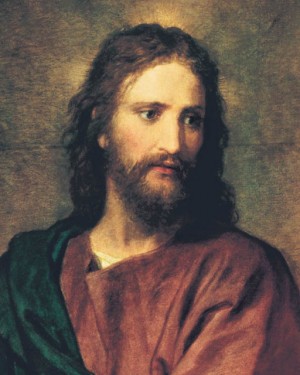
When people struggle to know whether or not God and Jesus Christ are real, they often ask in frustration, “Why doesn’t God just show Himself?” It sometimes seems to them that if He wants them to believe in Him, that would be the simplest way.

Why doesn't God Just Show Himself?Why doesn’t God just show Himself? To understand the answer to this question, we first have to examine why we came to earth. For members of The Church of Jesus Christ of Latter-day Saints, whose members are sometimes called Mormons, the explanation of life’s purpose begins even before birth. What happened to us before we were born explains why God seldom shows Himself today.

Mormon beliefs tell of a time before the world was created. God created our spirits. This is one reason Mormons consider God to be literally their Heavenly Father. Our spirits weren’t housed in bodies yet, although they had that form, but we did have our personalities, talents, and interests. In other words, we were uniquely ourselves. We lived with God during that time, getting to know Him and letting Him get to know us.

While this was wonderful, this experience didn’t allow us the full range of opportunity and experiences God wanted us to have. As a perfect Father, He knew we needed to  have challenges, tests, and hard experiences to become everything we could be. We know from our own experiences that we don’t entirely learn who we are until we live away from home and until we’ve faced some trials. If our parents make life too easy, we become spoiled and don’t develop fully.

To receive the full experience God planned for us, we needed physical bodies, families, and a chance to develop faith. Faith is the answer to “Why doesn’t God just show Himself?” While we lived right in God’s presence, we didn’t need faith to believe in Him. However, faith is an important part of life’s experiences. When we learn to have faith in things we can’t see, it dramatically improves our life experience. Learning to have faith can help us learn to love and to commit to a family even in hard times. After all, we can’t see or scientifically measure love and we can’t see into the future to know how family life will work out. So much of that is based on faith. With faith, we can have the courage to take risks that enhance our lives—trying a skill we’re not sure we’re good at, giving ourselves uplifting experiences outside our comfort zone, or making wiser choices.

There are many possible things to believe in, but when we’re forced to sort through them and make choices about what to believe and what to reject, we improve our ability to make wise decisions. The ability to make good decisions helps us in both our temporal and spiritual lives.

And so, God told us that if we chose to come to Earth, we would lose our memory of our time in His presence, and even of His existence. However, He would send along a toolkit that would help us to know it happened, if we chose to open the kit and use it.

One gift God gave us is the Spirit of Christ. Every person has this gift at all times. We can also receive promptings from the Holy Ghost, and after baptism and confirmation by someone with the proper authority, we can have the Holy Ghost with us all the time, as long as we are living worthy of the presence of the Holy Ghost.

Harold B. Lee, a past Mormon prophet, explained the Light of Christ or Spirit of Christ in this way: “Every one of you born into this world enjoys the blessing of this Light that shall never cease to strive with you until you are led to that further light from the gift of the Holy Ghost that may be received only upon condition of repentance and baptism into the Kingdom of God.” (See Decisions for Successful Living, Salt Lake City: Deseret Book Co., 1973, p. 144.)

God cannot show Himself to most of us because we agreed to come here in part to learn how to have faith. By having all of us learn faith by seeking out God and Jesus Christ, God is able to create a plan to help us learn. Of course, just as it is with anything we want to learn, we must make a choice to learn faith and we must commit ourselves to doing so.

The Book of Mormon, which God commanded ancient prophets on the American continent to create, was written to serve as a second witness of Jesus Christ. It is meant to be used with the Bible. It is structured much like the Bible, in that a variety of authors wrote the book and the book is filled with both stories and sermons designed to help us gain faith. One of the most famous sermons on faith in this book was given by a prophet named Alma. Alma taught listeners to conduct an important experiment that would help them gain faith. This experiment is as valid today as it was anciently.

Alma’s sermon was preached to a specific group of people called the Zoramites. The Zoramites had once been followers of Christ, but had somehow become sidetracked and had corrupted the gospel. They became very worldly and were entirely focused on wealth. They believed wealth was proof of God’s approval on a person. They believed this so strongly they would not allow the poor into their churches. Their services were nothing more than a celebration of how wonderful they were and once they went home, they gave no further thought to God until the next week.

Unfortunately, they taught there was no way to worship God except inside their churches. The poor, being excluded, felt they were lost forever due to their poverty. When Alma and his missionary companions arrived to preach, the poor asked Alma what they could do to be saved. Alma taught them that what they needed was not to get inside this corrupt church, but to have faith.

He challenged them to experiment with faith. He assured them that all they needed to get started was a desire to have faith—just a desire, and nothing more. God could take that desire and grow it into something wonderful.

He praised them for being humble, but pointed out they were humble out of necessity. He told them they would be blessed even more if they were humble by choice as well. Humility is essential to gaining faith in God. By accepting they were not the greatest and highest power in the world, they could learn to obey God and accept His will, even if it wasn’t what they hoped it would be. This would allow them to repent when they sinned, and repentance allows God to forgive through the atonement of Jesus Christ.

Alma then tells them something that helps us understand more about why God can’t just show Himself to us:

“17 Yea, there are many who do say: If thou wilt show unto us a sign from heaven, then we shall know of a surety; then we shall believe.

18 Now I ask, is this faith? Behold, I say unto you, Nay; for if a man knoweth a thing he hath no cause to believe, for he knoweth it.”

19 And now, how much more cursed is he that knoweth the will of God and doeth it not, than he that only believeth, or only hath cause to believe, and falleth into transgression? (See Alma 32:17-19).

From this we see many people, even then, wanted signs—proof. But if you have proof, you don’t need faith. Furthermore, your punishment for failing to keep the commandments is far greater if you have proof of God’s existence than if you only have faith in it. Greater knowledge comes with greater responsibility. In addition, history has shown that having a sure knowledge doesn’t really convert the heart.

In an early Book of Mormon writing, we learn of a family that had four sons when the story began. The two oldest were self-centered and unfaithful. When they abused or tried to kill their brother, angels came to them multiple times. Despite seeing angels and many miracles, they were not truly converted. They continued to deny what God wanted them to do and to disobey commandments. They had proof, but they had no real conversion in their hearts.

This is why Alma found it so important to teach his students that they needed faith. He told them their faith would not be a perfect knowledge—if it were, it wouldn’t be faith. He compared the growth of faith to a seed. First, they must plant the seed in their hearts and not cast it out by choosing to not believe. The seed would then, if it was a good seed (meaning if God was real), begin to swell or grow in their hearts. When they felt this swelling feeling, and felt their souls enlarge, they would know it was a good seed—signs of the reality of God.

Alma reminded them that seeds bring forth their own kind. An apple seed will grow an apple tree. A seed of faith in God will grow faith in God and in itself, then, will prove that God is real. Satan cannot bring forth joy and peace, and that is what you feel when you are praying to know if God is real.

This part of the experiment leads to perfect knowledge, but only in one thing—whether or not the seed was a good one and capable of changing you. If we plant a tree seed, we have to nurture the seed to get the best results. Faith also has to be nurtured in order to grow. If you neglect it, it will die, not because it was bad, but because you didn’t take care of it.

Nurturing the seed of faith requires prayer, scripture study, and pondering of gospel truths that are learned. It requires us to agree to act on whatever God tells us, even if it isn’t what we hoped to hear. Alma warned his listeners that developing a strong faith requires a long commitment, just as growing a tree does. However, it leads to faith in God and eternal life. The rewards are more than worth the work involved.

Once we have faith, we no longer need God to appear before us. Our hearts, and the Spirit of Christ, will tell us everything we need to know.

Where Did Satan Come From?

Monday, October 17th, 2011

In the Book of John, we learn, “All things were made by him; and without him was not any thing made that was made.” (See John 1:3.)

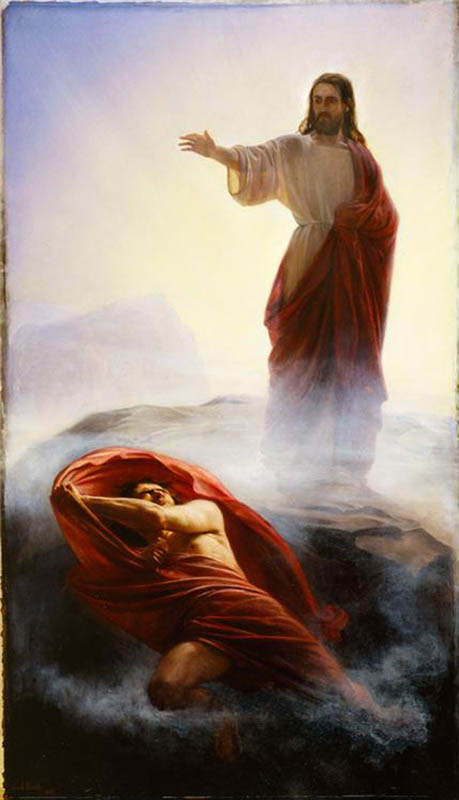
Jesus Christ ordered Satan to leave.It is clear, then, that anything that exists was created by God, and so God made Satan. However, he wasn’t Satan at his creation and he was not created evil. The prophet Isaiah helps us to understand what turned Lucifer into Satan and demonstrates that he is not the being God created him to be: “How art thou fallen from heaven, O Lucifer, son of the morning! how art thou cut down to the ground, which didst weaken the nations!” (See Isaiah 14:12.)

In other words, Satan, as created, was not evil. God does not create anything that is evil. The creation accounts in Genesis consistently remind us that everything God creates is good. How did Satan go from being a good creation of God to being the source of evil?

The Church of Jesus Christ of Latter-day Saints, whose members are sometimes called Mormons, teach that agency was an essential part of God’s plan for us. From the very beginning, God gave us the right to choose for ourselves. Although He made rules for Adam and Eve in the Garden of Eden concerning the tree, he did not lock it up where they could not get to it. In fact, he put it right in the center of the Garden, where they would see it often. They were free to choose to eat from it, and they did.

Agency explains how Lucifer became Satan. Mormons believe that God first created our spirits and allowed us to live with Him in Heaven prior to the creation of the Earth. This makes Him very literally our Father, and it also means we began to develop our characters and personalities prior to birth. We did not have bodies, but we did have personalities, and the ability to choose whom to become. Some worked hard to become as much like God as possible. Some did not. Some were power-hungry, even then, and it appears Lucifer was one of these. The events that would occur demonstrate he was popular among a certain type of spirit and that he used that popularity and his agency to cause others to make poor choices, even then.

Mormon beliefs talk of a great meeting held in Heaven in which we were told of the plan to create an earth for us. We would all, in our turn, go there to live for a while. We’d gain a body, come to earth through a family, and have agency. We would not remember our time in Heaven, but we would be given the ability to feel God’s presence and counsel to us if we listened and were anxious to do the right thing. Through what would be known as the Spirit of Christ, we would be able to discern truth from lies if we chose to do so. The Holy Ghost would be available to help us on Earth. With this help, we would be expected to search out the truth and then commit to live it.

Of course, we wouldn’t be perfect, and the Law required perfection in order to return home. To this end, God would provide a Savior who would come to earth through a mortal mother, with God as His father, and live a sinless life. He would then make a voluntary sacrifice on our behalf, known as the atonement. This would allow us to overcome death and to repent. It would make it possible to overcome the demands of the law through mercy. Jesus Christ volunteered for this calling, saying he wanted all the honor and glory to go to God.

Lucifer, however, did not like God’s plan. He used his influence to try to convince us to replace God and Jesus Christ with him. Lucifer said he would take control of our lives on earth, controlling every movement and thought so we could not possibly sin. In that way, no atonement would be necessary (relieving him of the need to suffer on anyone’s behalf) and we’d all come home safely. In exchange, however, he wanted us to let him take God’s place and receive all the honor and glory.

Lucifer’s plan was a selfish one, designed to win him a position of power and authority without undue sacrifice. This was a sharp contrast to Jesus’ proposal, which asked nothing for himself. However, perhaps because Lucifer was popular, or perhaps because his plan seemed to offer security and an easy route to success, one-third of God’s children chose Lucifer as their leader, rejecting both God and Jesus Christ.

They were not allowed to come to earth as a consequence. They will never receive bodies or families, and because they rejected the atonement before they even came to earth, they are not allowed to benefit from it. They were cast out of heaven for their efforts to overthrow God and His plan. All the remainder of the spirits in Heaven began to prepare for mortality.

However, Lucifer’s work was not done. He became Satan and he was angry at being cast out of Heaven. He was also miserable, having been denied what even he knew was a wonderful opportunity—even though he made the choices that led to it. He was determined to make every who had refused to follow him miserable.

His role in our lives today is to try to get us to reject the great plan of salvation we once embraced, to disobey God’s commandments, even to choose not to believe in God or Jesus Christ. He is determined to undermine God’s work.

Although Satan is allowed to try to make us sin and reject the opportunity to return home to God’s presence, there are some things he cannot do. He cannot force anyone to sin: he can only encourage sin. He cannot prevent anyone from knowing the truth who is determined to know it: he can only try to keep us from wanting to know. Satan cannot remain if we tell him to leave. In the New Testament, we can look to the example of Jesus Christ to know how to handle Satan’s temptations and lies. When Satan tried to tempt Jesus, Jesus simply refused to pay any attention to him and ordered him to leave.

Satan then, began life as we all did, as a child of God. He used his God-given agency to reject God and the gospel and chose instead to live a selfish life harming others. While he is temporarily allowed to try to carry out his revengeful goals, we are under no obligation to give him power over us.

Why is Life So Hard?

Friday, April 8th, 2011

The Church of Jesus Christ of Latter-day Saints, whose members are sometimes called Mormons, recently held its semi-annual General Conference. In this conference, Mormon leaders instruct members and other listeners in ways to better live Christ’s teachings.

In the April 2011 General Conference, Paul V. Johnson answered the question, “Why is life so hard?” He taught that trials often come to us because Jesus loves us. It might not seem, at first glance to be much of a gift, but when we understand why we came to earth, the reasoning behind this becomes clear.

Mormon beliefs teach that God created our spirits. As spirits—meaning we had no body—we lived with God, getting to know Him and becoming the people we are today. Eventually, of course, every child needs to leave home and so God prepared the earth for us. When we came to earth we would take with us our own personalities but we would forget who we had been and where we had come from. We’d gain bodies and families. Many of us would have opportunities to rediscover God and Jesus Christ and even those who did not would have with them the Light of Christ, which everyone always has. We’d have trials which would serve as a test to see if we could handle them properly.

But trials are not just a test. They are also a gift. When we face trials, we often discover something about ourselves we didn’t know was there. When we handle them badly we learn our weaknesses and can choose to overcome the challenges. When we handle them well, we can grow to be more than we ever imagined we can be. Trials help us become everything God knows we can be.

Elder Johnson’s talk was given in the Sunday morning session of Conference, It was called, “More Than Conquerors through Him That Loved Us.” The title comes from the Biblical apostle Paul in Romans, chapter 8:

35 Who shall separate us from the love of Christ? shall tribulation, or distress, or persecution, or famine, or nakedness, or peril, or sword?

 36 As it is written, For thy sake we are killed all the day long; we are accounted as sheep for the slaughter.

 37 Nay, in all these things we are more than conquerors through him that loved us.

 38 For I am persuaded, that neither death, nor life, nor angels, nor principalities, nor powers, nor things present, nor things to come,

 39 Nor height, nor depth, nor any other creature, shall be able to separate us from the love of God, which is in Christ Jesus our Lord.

Elder Johnson reminded listeners that no one is exempt from trials. Money can’t prevent them. Obedience to the commandments can’t prevent them. Trials are an essential part of life—even Jesus faced trials and temptations. The trials He faced were an essential part of His own mortal experience and they are also an essential part of our own.

At times it may seem that our trials are focused on areas of our lives and parts of our souls with which we seem least able to cope. Since personal growth is an intended outcome of these challenges, it should come as no surprise that the trials can be very personal—almost laser guided to our particular needs or weaknesses.

There are times when we are tempted to tell God we are more than willing to take on our share of trials—just not that particular trial that looms ahead. We think we can’t handle that trial. However, if the trial comes, it is proof to us that God knows we can handle it after all. More importantly, it means there is something He wants us to learn by experiencing it. We learn the most when we are pushed far outside our comfort zones. Trials are painful, but seen from an eternal perspective, they are worth it.

In the Book of Numbers, in the Old Testament, Moses is struggling with his group of whiny Israelites. They were worried about having nothing to eat, so God began providing them with manna. Soon, however, the novelty of the manna wore off and they began to whine for meat, vegetables, and other foods from their past. Moses came pretty close to the breaking point. He even complained to God, asking why he had to deal with these people—they were, after all, God’s children, not his. He suggested, in a clear measure of his frustration, God just kill him. Death seemed preferable to coping with this trial, which he insisted was beyond his ability to bear. Instead, God offered him some help and made him carry on. Over time, Moses became a strengthened leader, better able to handle the trial he faced.

Our trials are personalized to our specific needs. The reason some people have seemingly harder lives than others is often because of the specific lessons that person might need to learn. God knows exactly which trials we need. The person with seemingly easy trials might actually face greater danger than the person with clearly challenging trials. It is often said, for instance, that most people feel certain they would be willing to die for their faith, but that the truth is we are more often called on to live for it. While dying for our faith might seem to be harder and more grievous, in truth living the small, day-to-day challenges to our faith might prove to be far harder. Many of us measure up surprisingly well to the severe trials, but fumble on the smaller ones, some of which don’t really look like trials, and so catch us off-base.

For those who are frustrated over a deep trial, Elder Johnson consoles:

A pattern in the scriptures and in life shows that many times the darkest, most dangerous tests immediately precede remarkable events and tremendous growth. “After much tribulation come the blessings.”  The children of Israel were trapped against the Red Sea before it was parted.  Nephi faced danger, anger from his brothers, and multiple failures before he was able to procure the brass plates.  Joseph Smith was overcome by an evil power so strong that it seemed he was doomed to utter destruction. When he was almost ready to sink into despair, he exerted himself to call upon God, and at that very moment he was visited by the Father and the Son. Often investigators face opposition and tribulation as they near baptism. Mothers know that the challenges of labor precede the miracle of birth. Time after time we see marvelous blessings on the heels of great trials.

Remembering this can help us endure our trials. We can know that if we face our trial with courage, look for the lessons to be learned and the skills to be gained, when it ends we will receive the reward of our efforts. We will be stronger, have increased faith and trust in God, and will be better prepared for the next trial.

Our Heavenly Father loves us, and we “know that whosoever shall put their trust in God shall be supported in their trials, and their troubles, and their afflictions, and shall be lifted up at the last day.” Someday when we get to the other side of the veil, we want more than for someone just to tell us, “Well, you’re done.” Instead, we want the Lord to say, “Well done, thou good and faithful servant.”

Watch the entire talk in speech and sign language:

Mormons Build Solar-Powered Meetinghouse

Friday, April 30th, 2010

On Tuesday, April 27, 2010, The Church of Jesus Christ of Latter-day Saints, whose members are often casually called Mormons, showed reporters around a new solar-powered meetinghouse. It is one of five environmentally friendly chapels serving as a test program to monitor effectiveness. The pilot program will eventually lead to environmentally friendly meetinghouses world-wide.

Mormon CreationThe Mormons have a long history of environmentalism, beginning with Joseph Smith’s injunctions not to kill animals unless they are needed for food, and Brigham Young’s regular warnings to members not to waste the Lord’s natural resources. He frequently reminded members everything belonged to God and we have no right to waste it. He was very careful about reusing and recycling in his personal life, and expected others to do the same. (more…)

New Gospel Principles Manual Teaches About Mormons

Tuesday, November 10th, 2009

The Mormons—a nickname for The Church of Jesus Christ of Latter-day Saints—have released a new edition of Gospel Principles. This lesson manual is designed for both classroom and personal study. Adults who are visiting a Mormon Church to learn more and those who are new members use this as a Sunday School textbook to learn the basics of Mormon beliefs before moving into the regular, more advanced Sunday School class. It can be read online at no cost and without registration, making it an inexpensive and organized way to learn the essential teachings of the Mormons as taught to their own members. (more…)

Obedience to Laws Brings Freedom

Friday, August 28th, 2009

The Mormons are sometimes seen as having a great many restrictive rules. Mormons themselves know that within the rules are many opportunities for freedom, and that these rules actually make them freer than those with no rules.

An often-used example of freedom within structure is the sonnet. A sonnet is a poem with very strict rules.

Shakespeare’s sonnets each contained fourteen lines. Every line had ten syllables written in iambic pentameter. Despite this very strict structure, Shakespeare managed to come up with 154 sonnets, all different, and many other people have also created sonnets based on this formula. The structure does not prevent people from being creative and writing something close to their heart. Rather, it actually frees the author. By having the structure in place, the poet is free to focus all his attention on the message and wording of the poem, which, after all, is the point of a poem. (more…)

Pew Forum Surveys Mormons About God

Friday, July 31st, 2009

The Pew Forum, which is not affiliated with the Church in any way, did a study of Mormons in the United States. One aspect of Mormons in their personal lives involved their feelings about and relationships with God.

The study found that every Mormon surveyed believed in God, which was higher than any other religion previously

surveyed. In addition, nine out of ten were absolutely certain of God’s existence. Ninety-one percent of Mormons believe God is someone you can have a relationship with. All these figures are well above the normal for other groups. (more…)

Do Mormons Canonize Saints?

Monday, June 15th, 2009

In the Catholic faith, canonization is the official recognition that someone is a saint and was so even prior to the

official recognition. A process is followed to allow the church to determine who is a saint.

Mormons (the nickname for members of The Church of Jesus Christ of Latter-day Saints) do not follow this process. The term saint is used in the official name of the church and denotes, as used in the Bible, a community of people who followed God. (more…)

What Do Mormons Believe About Adam and Eve

Tuesday, May 5th, 2009

Mormons see Adam and Eve very differently than most of the Christian world. Rather than blaming Eve for all our problems, we celebrate her as the mother of all living and honor her for making the hardest choices. Through the scriptures of the restoration and modern revelation, we have learned more about these two first ancestors. (more…)

Did God Create Man Because He Craves Worship?

Thursday, April 30th, 2009

God is perfect, and therefore, He does nothing out of ego. Every choice He makes is with our eternal well-being in mind. (more…)