Posts Tagged ‘Mormons’

Do Mormons Have Collections on Sundays?

Saturday, April 25th, 2009

A visitor to a Mormon Church might be surprised to learn the collection plate is never passed. Young men do go aisle to aisle, but they are bringing the Sacrament (communion) to the members. Mormons are commanded to pay tithing, but it is done privately.

“Bring ye all the tithes into the storehouse, that there may be meat in mine house, and prove me now herewith, saith the Lord of hosts, if I will not open you the windows of heaven, and pour you out a blessing, that there shall not be room enough to receive it” (Malachi 3:10).

Tithing is defined as one tenth of a person’s income. The specifics of what defines income is left to the member’s own conscious and specific guidelines are not given. Instead, members are encouraged to counsel with God in order to what to pay tithing on.

Mormon TithingThe tithing is paid privately by the member. Near the office of the bishop-the local ecclesiastical leader-there is usually a small shelf with envelopes and tithing slips. The member takes these and privately fills out the slip and places it with the tithing into the envelope. Then, on Sunday, before or after church, the member quietly hands it to a member of the bishopric. The bishopric consists of the bishop and his two counselors. At least two leaders are present when the tithing is counted and recorded. It is sent to Salt Lake City, to church headquarters. There, church leaders prayerfully decide how to use the funds. Each ward (congregation) receives a portion of the funds, based on church attendance. The ward and each organization in the ward plan and submit budgets, which are approved or altered, and the money is allocated accordingly.

The money is used to pay for the administration of the church, missionary work, and meeting special needs of church members and others. God has promised blessings to those who pay a full tithing. These blessings are not always financial, although they can be. However, members are encouraged to pay tithing not to receive a reward, but out of love for their Heavenly Father. Of course, they also take pride in participating in the furthering of God’s work.

In addition to tithing, members of the church pay a monthly fast offering. The first Sunday of each month, members

go without food or drink for twenty-four hours. This requires them to miss two meals, since they begin after lunch and end their fast just prior to a later lunch the next day. They use this time to contemplate the gospel, build their testimonies, and offer special prayers for their needs or the needs of others. They follow up by donating at least the amount of money they saved to a special fast offering fund, which is used exclusively to care for the poor. This allows members to care for the poor, as commanded by the Savior, without further sacrificing their own income, unless they choose to donate beyond what they saved, but also gives them a very small glimpse into the challenges of hunger. By sacrificing to make this offering, their hearts are softened and their character strengthened.

There are other offerings members may give if they choose. There are specific programs listed on the tithing slip and the member can choose to make additional donations to the programs they especially care about. These include missionary work, temple building and printing copies of the Book of Mormon to give to those who are interested in learning about it.

Another program paid for through donations is the perpetual education fund. In some countries with great poverty, the church offers two year loans to help church members, particularly those who have sacrificed to serve a two year mission for the church, to attend a technical school and prepare for a career. The recipient begins to make small payments to repay the loan soon after starting school, and larger ones after graduation, and that money is used to pay for another person’s scholarship. Donations from members increase the number of people who can receive educations and all money donated goes into the loans. The church pays administrative costs out of other funds.

Many who are not members of the church benefit from another program, in which members donate to a humanitarian aid program. This program pays for donations during disasters, such as Hurricane Katrina. It also provides assistance to developing nations. Recent programs have included donations of wheelchairs, clean water programs, and training for neonatal care. Again, the donations to this program are given directly to the actual programs, with administrative costs absorbed by the church’s other funds. The program is paid for by donations from church members, and even from those who are not church members, but who approve of the work being done without regard to religion, or who may have received help from the program. No missionary work is done through this humanitarian effort.

Members are encouraged to pay their tithes and offerings cheerfully:

Every man according as he purposeth in his heart, so let him give; not grudgingly, or of necessity: for God loveth a cheerful giver. (2 Corinthians 9:6-7)

God has promised rich rewards for the payment of tithes and offerings. He promises we won’t lack for the necessities, and he also promises spiritual blessings, as our testimonies grow and our love for Heavenly Father increases. We can learn of some of the promised blessings of tithing, as well as the penalties for not paying it, from Malachi in the Bible:

7 Even from the days of your fathers ye are gone away from mine ordinances, and have not kept them. Return unto me, and I will return unto you, saith the Lord of hosts. But ye said, Wherein shall we return?

8 Will a man rob God? Yet ye have robbed me. But ye say, Wherein have we robbed thee? In tithes and offerings.

9 Ye are cursed with a curse: for ye have robbed me, even this whole nation.

10 Bring ye all the tithes into the storehouse, that there may be meat in mine house, and prove me now herewith, saith the Lord of hosts, if I will not open you the windows of heaven, and pour you out a blessing, that there shall not be room enough to receive it.

11 And I will rebuke the devourer for your sakes, and he shall not destroy the fruits of your ground; neither shall your vine cast her fruit before the time in the field, saith the Lord of hosts. (Malachi 3)

What is the BYU Jerusalem Center?

Tuesday, April 7th, 2009

Brigham Young University is a university operated by The Church of Jesus Christ of Latter-day Saints, sometimes referred to as Mormons. The BYU Jerusalem Center for Near Eastern Studies was built to house and educate BYU students who are attending a study abroad program for up to six months. The center is also used by research scholars, sometimes working with local scholars on various projects. Students study the Bible, ancient and modern near-eastern studies, Hebrew, and Arabic, with a particular focus on the life of Jesus Christ and the work of the apostles. They have classroom study interspersed with field trips throughout the region. It’s built on Mount Scopus overlooking the Mount of Olives in Jerusalem and is made from white Jerusalem limestone. The center provides religious services for members of the church who live in or are visiting the area.

Mormon EducationStudents are oriented prior to embarking on their trip. They are required to sign a pledge that they will not use their time there to try to convert the Jewish people. The purpose of the center is education, not missionary work. Although there were some initial local protests, they subsided when the church worked with the government to create a legal document barring missionary work. In 1986, responding to the concerns, Nathan Perlmutter, U.S. national director of the Anti-Defamation League of B’nai B’rith stated there was no evidence of any conversions in the years the church had been conducting their study abroad programs.

During the time of controversy, President Gordon B. Hinckley, who was then the second counselor in the First Presidency of the Church, was asked:

Why is there so much controversy over the Brigham Young University Center now under construction in Jerusalem?

I cannot understand why there should be. Fears have been expressed that it will be used as a means to proselytize the Jewish people. University officials have given assurance that this will not be the case. All legal requirements were fully met, including the requisite public notice in Jerusalem papers, before the government granted construction permits. This is a facility designed to accommodate a program which has been carried on continuously for many years. It is intended to accommodate the needs of students who, in an academic atmosphere, can become better acquainted with the history, the culture, the nations, and the people of Israel and the Middle East. Experience has shown that those who have participated in the program have come away with increased appreciation for the influences and the people to whom they have been exposed there. BYU officials have received from many Jewish people and from people of other faiths expressions of support for this project. I am confident that in the long term it will redound to the good of the people of Israel as well as to the educational interests of BYU and its students.” (Gordon B. Hinckley, “Questions and Answers,” Ensign, Nov 1985, 49)

Students moved onto the campus in 1987. Previously, students who studied there lived at Kibbutz Ramat Rachel. The church had operated Study Abroad programs in Jerusalem for seventeen years prior to the opening of the center.

Why Was a Restoration Necessary?

Tuesday, April 7th, 2009

After Jesus Christ died, the church had a challenging time. Persecution was intense, and the apostles did all they could to keep the church operating and to spread the gospel message to as many people as possible. However, given the limitations of technology, and the limitations of a small group of people to do the work, progress was slow and persecution increased. All the apostles but John the Beloved were murdered.

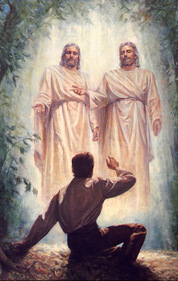
Mormon Joseph Smith First VisionPrior to His death, Jesus Christ had given His apostles all the authority necessary to operate the church when He was gone. This authority is known today as “keys.” They had the official priesthood handed down through the ages, and this gave them the proper authority. It is understood that Peter became the president of the Church after Jesus was resurrected and returned to His Father.

The apostles began to warn the people of a forthcoming apostasy. When Paul wrote to the Thessalonians, he explained to them that although they were eagerly awaiting the return of the Savior, it would not come yet, because there had to be a falling away first:

Let no man deceive you by any means: for that day shall not come, except there come a falling away first, and that man of sin be revealed, the son of perdition; (2 Thessalonians 2:3).

Even before the death of the apostles, the apostasy had begun. Several letters sent by apostles to church members warned them to remove false doctrine from their teachings. Paul wrote to the Galatians:

6 I marvel that ye are so soon removed from him that called you into the grace of Christ unto another gospel:

7 Which is not another; but there be some that trouble you, and would pervert the gospel of Christ.

8 But though we, or an angel from heaven, preach any other gospel unto you than that which we have preached unto you, let him be accursed.

9 As we said before, so say I now again, If any man preach any other gospel unto you than that ye have received, let him be accursed.

10 For do I now persuade men, or God? or do I seek to please men? for if I yet pleased men, I should not be the servant of Christ.

11 But I certify you, brethren, that the gospel which was preached of me is not after man.

12 For I neither received it of man, neither was I taught it, but by the revelation of Jesus Christ. (Galatians 1)

Similar warnings were sent to Thessalonica, and Ephesus, and Paul warned the Hebrews, “Therefore we ought to give the more earnest heed to the things which we have heard, lest at any time we should let them slip.” Timothy grieved that they had lost all the Christians in Asia to apostasy.

S. Kent Brown explains that one major division in the church was over the topic of the resurrection:

Much of the misunderstandings about the resurrection must be attributed to the notion of docetism, which came to be more and more influential during the second century. The term derives from the Greek verb dokeo, which means “to seem.” Docetics maintained that Jesus had only seemed to live among men, to suffer, and to die. In reality, they said, the heavenly Christ did not come into contact with the world of matter, for that would have defiled his divine nature.

Such a view of the Messiah denies that salvation comes as a result of Jesus’ suffering, death, and resurrection. In fact, the doctrine of salvation was subverted into the idea that Christ was a special messenger who brought to earth secret knowledge that would allow the elect to escape this corrupt world and to make their way back to the presence of the Father. This special knowledge was called gnosis, and those who held such a view of the Messiah were known as gnostics. (S. Kent Brown, “Whither the Early Church?,” Ensign, Oct 1988, 7)

When the apostles died, they took the keys to the kingdom with them. These keys, of course, are not literal, but it means the priesthood authority to lead God’s church was gone. Without that priesthood, there could not be a prophet. Prophets are the only method for the church to receive revelation from God.

Without a prophet, members of the church were unable to seek church-wide revelation concerning doctrine. Often questions arose and false practices began to wander into the church. Whereas, previously, the prophet and apostles could set things straight, there was no longer anyone qualified to do that. The differences of interpretation widened and soon, there were many different sects of Christianity, with differing beliefs.

There were periodic efforts to stem the flow of differences, including the council held at Nicaea. However, because the people who gathered there to create a unified creed didn’t have a prophet, they put the doctrine to a vote. They changed a few opinions, and essentially excommunicated those who didn’t cooperate.

Of course, truth can’t be found by voting, and so this really didn’t resolve the problem. While the majority of the churches-those invited to the meeting-chose a common belief, they still hadn’t learned the will of God on the subject. Divisions weren’t ended simply by declaring a creed, either. Over time, more and more denominations developed as people began to evaluate what their churches believed and started to develop even more opinions.

Over the centuries, we’ve seen many religious leaders, such as Martin Luther, who became concerned with how far Christianity had moved from the path set by the Savior. Although they didn’t have the keys to the kingdom, they made important contributions to the process of the restoration.

The restoration was necessary to fulfill the promises made by the Savior and His apostles that Christ would not come again until there had been a restoration of all things. This occurred in the 1800s, when Joseph Smith, then a fourteen-year-old boy, went into the woods to ask God which church to join. He was instructed not to join any, but to wait. In time, he was guided through the process of having the keys returned to the earth, and to the restoration of the fullness of the gospel.

All of this is necessary in order to prepare for the second coming. Each person on earth must have the opportunity to prepare for the second coming, just as the Jewish people had the opportunity to prepare for the first coming of Christ. The restoration allows us to do everything that is necessary for Christ’s return to earth and fulfills the promises of God.

How can Mormons have authority when the unbroken line of succession comes from Peter?

Wednesday, March 18th, 2009

Mormon beliefs teach that the church is the restoration of the church that existed in the days of the ministry of Jesus Christ. They teach that their priesthood is an unbroken line of authority. This puzzles those who teach that the line of succession comes from Peter and was never broken.

Mormon ApostlesWhen Jesus chose His apostles, he gave them the authority to act for God. He held the keys to the kingdom, but could distribute them to those called of God.

18 And I say also unto thee, That thou art Peter, and upon this rock I will build my church; and the gates of hell shall not prevail against it.

19 And I will give unto thee the keys of the kingdom of heaven: and whatsoever thou shalt bind on earth shall be bound in heaven: and whatsoever thou shalt loose on earth shall be loosed in heaven. (Matthew 16)

These keys, of course, are not physical. They represent the authority to act in God’s name. The verse just quoted does not mean Jesus relinquished the keys, but rather that Peter had use of them during the time he served as an apostle. Many have interpreted the rock to be Peter, but other verses in the New Testament tell us this is not so:

And did all drink the same spiritual drink: for they drank of that spiritual Rock that followed them: and that Rock was Christ. (1 Corinthians 10:4)

In time, Jesus died. His apostles also died, and we don’t read of Peter or any other apostle bestowing those keys on anyone else. This is because after the death of the apostles, the church entered into a lengthy apostasy. This apostasy had been prophesied by many Biblical prophets.

11 Behold, the days come, saith the Lord God, that I will send a famine in the land, not a famine of bread, nor a thirst for water, but of hearing the words of the Lord:

12 And they shall wander from sea to sea, and from the north even to the east, they shall run to and fro to seek the word of the Lord, and shall not find it. (Amos 8:11-12)

During this time, there wasn’t a prophet, and the keys of the kingdom-the priesthood authority to administer God’s church was taken. It was because of those so many variations of Christianity occurred. With no one to turn to for a certain answer, Christians were forced to decide for themselves what was true. When there was a disagreement, they held councils to hammer out a deal or they just started another Christian denomination. Today, we see thousands of denominations across the world.

God has also promised to restore what was lost.

20 And he shall send Jesus Christ, which before was preached unto you:

21 Whom the heaven must receive until the times of restitution of all things, which God hath spoken by the mouth of all his holy prophets since the world began. (Acts 3)

There couldn’t be a restitution if there had never been a falling away. This restitution began with Joseph Smith in the 1800s. He wanted to know which church to join, and asked God in prayer. God and Jesus Christ appeared to him and Jesus told him not to join any of them, because none had the complete truth. When he was older, an angel named Moroni tutored him in preparation for the restitution of all things that was promised in the Book of Acts.

So how did the keys for the priesthood end up back on earth? While Joseph Smith and Oliver Cowdery were translating the Book of Mormon, they encountered scriptures on the importance of baptism by those in authority. They went to the banks of a river in Pennsylvania, where they were then living, and prayed to know how to go about this. While praying, they heard the voice of the Savior and then an angel appeared to them. This angel was John the Baptist, the Savior’s cousin. He held the keys to the Aaronic priesthood at the time of his death and was therefore able to restore them to the earth by distributing those keys to Joseph and Oliver by placing his hands on their heads and performing the appropriate priesthood ordinace. He did this, saying,

Upon you my fellow servants, in the name of Messiah, I confer the Priesthood of Aaron, which holds the keys of the ministering of angels, and of the gospel of repentance, and of baptism by immersion for the remission of sins; and this shall never be taken again from the earth until the sons of Levi do offer again an offering unto the Lord in righteousness. (Joseph Smith-History 1:68-74)

With these keys in place, the two men were able to baptize each other. Only the Aaronic priesthood is needed to carry out a baptism.

John had not received the Melchizedek priesthood, however, because it was bestowed on the apostles after his death. Since he didn’t hold those keys, he was not able to restore them. For the line to be unbroken, the keys must come from someone who holds them currently. This higher priesthood would be necessary to confer the Gift of the Holy Ghost, and to organize the church.

The restoration of the Melchizedek priesthood came later. Again, while praying on the banks of the Susquehanna River, they received an angelic visit, this time from Peter, James, and John. These three apostles received the greater priesthood on the Mount of Transfiguration.

We can read about this event in Matthew 17. Jesus took Peter, James, and John to a mountain, where he was transfigured. While this occurred, Moses and Elias appeared to them. The Mechizedek priesthood was restored to the earth by these two prophets, who had received it during their time on earth. They gave it to Peter, James, and John so they would be able to administer the gospel after the Savior died.

Because they held this priesthood, they were able to return to earth as angels and bestow the keys on Joseph and Oliver, again bringing the priesthood back to earth. With these keys, the church could be restored.

This is how the Mormons demonstrate an unbroken chain of authority. Today, every worthy male who is old enough can hold these two priesthoods. They must receive it from someone else who already holds it. The entire priesthood chain has descended from those first two ordinations done by three Biblical apostles.

Does Religion Take Away Your Agency?

Tuesday, March 17th, 2009

This is a common misconception about religion. Mormons teach that each person is given agency to choose for himself how to live. Mormon beliefs begin the story of life prior to birth, when God created each of us as a spirit. We lived with Him, learning, developing our character and personality, and practicing making choices, until the time came to come to earth. At that time, we were, as always, given our agency. We could choose to come to earth with Jesus as our Savior. If we made this choice, we would continue to have agency and some would use it unwisely and be unable to return. God would send a Savior to do that part we couldn’t do for ourselves. This Savior, Jesus Christ, would take on the sins of the world and die for them.

Jesus Christ MormonThe other choice was to follow Lucifer. Lucifer wanted to take away our agency and send us to earth as puppets, with himself as the puppet master. He would control our every thought and action, and we’d live perfect lives, but for no purpose. Some were uncomfortable with the idea of continued agency, and rejected it. They preferred to stay with Satan and allow him to do their thinking for them. Those who followed Lucifer elected to give up their agency and were denied a chance to come to earth. They could not live here without agency.

The Mormon religion allows us to maintain control over our lives. Mormons teach that each person is required to find out for himself if the Mormon religion is true. While a very young child might believe simply because his parents believe, the child is taught, before he is eight years old, to begin deciding for himself. At age eight, he can be baptized, and before this happens, he is to learn his religion and to pray to know if it’s true.

This process is often repeated several times, as the child grows up and gains a stronger ability to recognize the promptings of faith. The pattern was set for us by Joseph Smith, the first Mormon prophet of modern times. He wanted to know which church to join, and after reading in the Bible that God would tell him, he went into the woods to ask God. Both God and Jesus Christ came to him to answer His question.

Most of us won’t get that type of answer, but we can receive an answer to our prayers, just as Joseph Smith did.

Does joining a church force you to give up your right to think for yourself? Of course not. Because each member of the church is taught to find out for themselves if the church is true, they are making an informed decision. Even after making this overall choice, if they learn something they’re not sure about, they can pray about that specific doctrine as well.

If your mother taught you not to touch a hot stove, and you obey, have you given up your right to think for yourself? No, because you are still free to touch the stove, as long as you’re willing to accept the consequences. You’re simply choosing to do what you know is best for you. Mormons, and other who believe in God, are doing the same.

One example often given is that of the sonnet. The sonnet is a poem with a very strict structure. Within the strict structure, however, a great deal of originality is possible. There are millions of sonnets, all following the rules, but all unique.

Believing in God is comforting. It’s a safe and healthy comfort, unlike the artificial comfort brought about by alcohol, drugs, or other immoralities many people turn to when they are stressed or worried. People who believe in God know there is someone who loves them and knows them, who always has their best interests at heart, and who, while not taking away our personal agency, will help us if we ask for help.

A true religion asks a great deal of its members. The Mormon religion isn’t a passive one. Because it’s a lay church, each member works hard to help it function, serving as leaders, teachers, and givers of service. They are held to a high standard of behavior.

Giving up your right to think for yourself is seemingly easy (although in reality it isn’t.) People looking for an easy way through life aren’t interested in being Mormon. The moral standards are very high and, since Mormons live in the everyday world, not in a sheltered community, this means making sacrifices and fighting those who want them to lower their standards. They raise families, have jobs, do volunteer work, and are also taught to make the most of the talents they have been given. They must figure out how to do this on their own, given their unique circumstances.

Religion never promises to be easy. The Mormons expect people to work hard for their own happiness and well-being, using the gospel as a guideline, but making choices within those guidelines.

Do the Doctrines and Practices of Mormonism Change?

Thursday, February 12th, 2009

There is an important difference between Mormon doctrine and Mormon practice. Doctrine doesn’t change, but practices do. For instance, baptism has been a commandment and a doctrine from the very beginnings of the church. Everyone must be baptized to become a member of the church, and that baptism must follow the example set by the Savior, so it has to be done by a person with the authority to baptize, and it must be done by immersion. Those are doctrines critical to our eternal salvation, and they will never change. However, there is no specific doctrine stating how many times a person can be baptized by a person in authority. Because of this, in the early church, people sometimes got re-baptized many times. Unfortunately, some people took this as a license to sin. Since baptism washed away their sins, they thought it meant they could do whatever they wanted as long as they were re-baptized after-wards. For others, it was similar to renewing wedding vows-a sign of commitment, which was a more appropriate use of the practice. Because the practice of re-baptism was being abused by some, however, by 1897, church leaders decided to discontinue the practice. Today, only those who are excommunicated for serious sin are re-baptized. Re-baptism was not a doctrine; it was a practice and therefore, could be changed. Baptism itself is a doctrine and cannot be changed.

Mormon BaptismGod has always taught certain things that were only to be done at a certain time-every generation needn’t build an ark or travel in the wilderness, but some did. The law of Moses was upgraded to a higher law, creating different practices for people living in different times. This is why we need prophets. There are situations arising regularly which require new programs or information.

The ninth Article of Faith (a statement of thirteen core beliefs of the Mormons) states: “We believe all that God has revealed, all that He does now reveal, and we believe that He will yet reveal many great and important things pertaining to the Kingdom of God.” This teaching makes the Mormons stand out among most other religion, and is essential to understanding the question asked.

Amos taught that God would do nothing without revealing it through His prophets. (Amos 3:7) God sent prophets to prepare us for the first coming of the Savior, and He’s now sent them for an equally important event-the Second Coming of the Savior. The Mormon church is headed by a prophet of God. God didn’t go into hiding and refuse to speak to us for the rest of mortality. He is once again speaking to us, guiding us toward the Second Coming and our own eternal salvation. As circumstances change, Mormon prophets make some changes, not to doctrine, but to practice.

One point of confusion is that often, people misunderstand the difference between doctrine and personal belief. There are many things leaders have said that they believed personally, but that were never canonized or made doctrine. There are also things members believe that were never taught by leaders, and there are also cultural things that are culture and not doctrine. Sometimes what people looking at the church see as changes in doctrine are really a matter of a return to true doctrine.

Mormons teach their members to follow a living prophet. When seemingly contradictory information is found in a search of teachings of church leaders, they are counseled to select the teaching of the current prophet. Harold B. Lee explained this to members:

“It is sometimes very interesting to get the reaction of people,” he observed. “I recall when President McKay announced to the Church that the First Council of Seventy were being ordained high priests in order to extend their usefulness and to give them authority to act when no other General Authority could be present. I went down to Phoenix, Arizona, and I found a Seventy who was very much disturbed. He said to me, ‘Didn’t the Prophet Joseph Smith say that this was contrary to the order of heaven to name high priests as presidents of the First Council of Seventy when they were named in the beginning?’

“And I said, ‘Well, I had understood that he did, but had you ever thought that what was contrary to the order of heaven in 1840 might not be contrary to the order of heaven in 1960?’ You see, he had not thought of that. He … was following a dead prophet, and he was forgetting that there is a living prophet today. Hence the importance of our stressing the word ‘living.’ ” (Harold B. Lee, “The Place of the Living Prophet, Seer and Revelator,” address to seminary and institute of religion faculty, Brigham Young University, 8 July 1964. )

This is exactly the pattern we see in the Bible. Each prophet received additional information that expanded our knowledge of God’s teachings-everything that would be needed from the day of creation to the end of the earth was not given to Adam in a single, neatly tied up package. We received our knowledge of God’s teachings line upon line, and we’ve gradually learned more about what God wants of us.

In New Testament times, people frequently did not understand this concept, and Jesus Christ was often criticized for “changing” the law. He responded, “Think not that I am come to destroy the law, or the prophets: I am not come to destroy, but to fulfil.

18 For verily I say unto you, Till heaven and earth pass, one jot or one tittle shall in no wise pass from the law, till all be fulfilled. He then went on to give examples of laws they had been taught, and his own additions to them-not changes, but greater light. He reminded them they had been taught not to kill. He added additional light by telling them they must not even be angry with others without cause. While they had already been taught not to commit adultery, He now taught them that even having impure thoughts toward another was adultery. He didn’t change the law-murder and adultery were still wrong. He simply enlarged it to meet the new capabilities of the people and helped the Church to progress toward perfection.

Throughout the Bible, we see that God gradually added new levels of responsibility to His people’s lives, and that He frequently gave commandments to one group that didn’t apply to another. In a church with a living God, we must expect things to change periodically to meet the needs of God’s kingdom. We must allow God to continue leading His people. Core doctrine will never change, but teachings may be enlarged upon and practices may be changed as God works to bring to pass the immortality and eternal life of His children.

Baptism for the Dead: Are Mormons Passing Over the Will of Others?

Tuesday, November 11th, 2008

Below is a question from someone who had just learned about baptisms for the dead that occur as ordinances in The Church of Jesus Christ of Latter-day Saints (“MormonChurch). The sender’s name is omitted for privacy. The response also follows.

Mormon TempleQuestion

I read about your baptism of people already dead. This is really outrageous. Don’t you have any respect for the will of dead people? If they weren’t converted by you, in life, is because they didn’t want it, or they weren’t meant to. There are other churches and other religions in the world, you are not the only ones. You just can’t pass over the will of dead people. Don’t you see that?

Response

Thank you for your question regarding the practice of baptizing for the dead. You raise a great question. In doing so, do we override the will of those who have passed on? The answer is simply, “not at all.” We believe actually, as you do, that all are free to choose to accept the ordinances of the gospel and the gift of eternal life. Our work by proxy is a labor of love in which an offer is made to those who have passed on to the next life, which they can accept or not.

We believe that those who choose to accept that ordinance, initiated for each of us by the Savior Himself, progress in their sphere and are able to have every gospel blessing available to all.

We believe that God is no respecter of persons, and that He provided a way for the untold millions who lived and died without a knowledge of Jesus Christ, to know about Him, and to choose to follow Him. Since baptism is an earthly ordinance, we provide that ordinance by proxy here on their behalf–for our direct ancestors–leaving their option to choose up to them.

We believe, further, that this was a common practice anciently. Paul himself, when engaged in a discussion with the Jews of his day affirming the resurrection, cited baptisms for the dead, saying, “Else why were they then baptized for the dead, if the dead rise not at all?” –reminding the people that there would be no need for that ordinance if there were no resurrection, but clearly there is a resurrection. That ordinance is ordained by God and takes place in dedicated temples.

We do not desire to force anyone to believe anything. We love those of all faiths and believe that as each lives according to the light they have, they will eventually have the fullness of the gospel.

We strive to do likewise.

God bless you. Please feel free to contact us at any time with further thoughts or questions.

What do Mormons think of infant baptism?

Thursday, September 11th, 2008

Personal Response by Alex Capanna

The Church of Jesus Christ of Latter-day Saints (LDS Church) does not teach or practice infant baptism, basing its disapproval of the practice upon the foundation of modern day revelation, as well as, doctrine taught in the Bible and the Book of Mormon; as an aside, the evidence for the LDS position as found in the Book of Mormon, is always supported by the Bible and I have included those validating Biblical references. Moroni 8:10-11 states:

Mormon Baptism“Behold I say unto you that this thing shall ye teach-repentance and baptism unto those who are accountable and capable of committing sin; yea, teach parents that they must repent and be baptized, and humble themselves as their little children, and they shall all be saved with their little children. And their little children need no repentance, neither baptism. Behold, baptism is unto repentance to the fulfilling the commandments unto the remission of sins.”(1) (Emphasis added) (more…)

What was it like to be a Mormon missionary in the Bible belt?

Thursday, June 12th, 2008

Personal Response by Lance

I served for two years as a Mormon missionary for the Church of Jesus Christ of Latter-day Saints (the Mormon Church) in Mississippi and Louisiana. It was the greatest experience of my life. I loved sharing the gospel with the people of the South because so many of them have deep faith in the Lord Jesus Christ. They were very kind to us missionaries coming to their door. I cannot count the number of people who let me into their home, as a complete stranger, to share what I believe. I learned that “southern hospitality” is very real and I believe it is because the people have good Christian values. There were also many people who turned us away but even this was usually done politely. (more…)

Do Mormons worship Joseph Smith?

Friday, April 25th, 2008

Personal Response by Richard Neitzel Holzapfel

Members of The Church of Jesus Christ of Latter-day Saints (Mormon Church) revere Biblical prophets and apostles such as Moses, Isaiah, Jeremiah, Peter, James, and Paul. They believe the Lord continues to call prophets and apostles in this modern day. Among those prophets God has chosen today is Joseph Smith (1805-44), the first modern prophet.

In addition to reverencing prophets and apostles, Mormons believe, like all Christians, that “there is one God, and one mediator between God and men, the man Christ Jesus” (1 Timothy 2:5). Therefore, Mormons truly and sincerely worship God, the Eternal Father, in the name of the Jesus Christ-God’s unique Son. They worship no other man or women no matter who they are or what they have done. (more…)