Posts Tagged ‘Mormon Beliefs’

Mormon Clean Water Initiative

Wednesday, February 2nd, 2011

Did you know that almost a billion people don’t have access to clean water? This extremely serious problem leads to dangerous health conditions for the people in the affected areas. Since 2002, the Mormons have been reduced the number of people without access to clean water by about seven million through clean water projects in 5,000 communities. Bringing in clean water reduces the threat of cholera, diarrhea, and typhoid. Depending on the needs of the area, the projects include digging wells, creating water storage, building delivery systems, or developing ways to purify existing water.

One way the church’s programs differ from many others is that one goal is self-sufficiency. Some charities go into an area, create projects, and do all the work themselves. Then they have to stay forever to keep it running. The Mormons know that if they can get a project running and then leave, they can do far more work and they can also create self-sufficiency and personal pride. (more…)

Do Mormons Celebrate Christmas?

Monday, December 6th, 2010
Mormon beliefs include the celebration of Christmas

Mormon beliefs sometimes get confused with the beliefs and practices of other religions. One such belief concerns the celebration of Christmas. Mormons tend to be very passionate Christmas celebrators, with many Mormon congregations hosting nativity festivals or free sing-alongs of Handel’s Messiah each year.

While Santa makes an appearance in some Mormon homes, the focus is always on the meaning of Christmas. Christmas is considered a sacred holiday and Mormon families are encouraged to simplify the secular portions of it in order to make more room for the spiritual elements of the Christmas celebration.

Mormons believe in the divinity of Jesus Christ and celebrate His birth as a pivotal moment in eternal life. The Book of Mormon, which Mormons consider a companion book to the Bible, says, “And we talk of Christ, we rejoice in Christ, we preach of Christ, we prophesy of Christ, and we write according to our prophecies, that our children may know to what source they may look for a remission of their sins.” (2 Nephi 25:26.) (more…)

Mormons Release New Adminstrative Handbook

Wednesday, December 1st, 2010

The Church of Jesus Christ of Latter-day Saints, whose members are sometimes called Mormons, released Book 2 of their administrative handbook to the leaders of the Church and also placed it online for the general public to view, a move that is rare in the religious word. This particular handbook is generally given only to leaders at various levels of the Church. Handbook 1 is only for bishops and stake presidents (Bishops are similar to pastors and stake presidents are similar to the bishop of a Catholic diocese).

The Mormons are a lay church and ordinary members are assigned specific roles to play, usually without in-depth training. As a result, the handbook helps them learn their responsibilities and the rules they are to follow. The handbook also outlines selected policies and teachings of Mormon beliefs. (more…)

BYU Studies Analysis of the White Horse Prophecy

Thursday, November 4th, 2010

From time to time an old Mormon “prophecy” known as the White Horse Prophecy, surfaces. Despite the fact that Mormon leaders have denounced it as not having been issued by Joseph Smith, some members and non-members continue to circulate it, sometimes trying to apply it to a specific political leader or commentator.

The legend is that Joseph Smith uses a horse analogy, with different colors or shades of horses representing various groups of people. The white horse, naturally, was assigned the role of the good people. In the prophecy the White Horse, often defined as the priesthood or a specific priesthood holder, would rush in to save the United States from attack or to save the Constitution. The White Horse is said to establish a safe haven in the far west where Mormons will be able to go to escape war and destruction. The Mormons in this sanctuary will be wealthy while the rest of the nation disintegrates. This destruction will be caused by an attack led by a Russian czar.

The problems associated with this reported prophecy are many. The revelation does not follow the pattern of LDS revelation. “I want to say to you, my brethren and sisters, that if you understand the Church articles and covenants, if you will read the scriptures and will become familiar with those things which are recorded in the Revelations from the Lord, it will not be necessary for you to ask any questions in regards to the authenticity or otherwise of any purported revelation, vision, or manifestation that proceeds out of darkness, concocted in some corner, surreptitiously  presented, and not coming through the proper channels of the Church.” (Joseph Fielding Smith in the 1918 General Conference.)

In other words, revelations aren’t given the way this one was. Our first record of this revelation comes not from Joseph Smith, but from Edward Rushton, who joined the Mormon Church when he was seventeen years old. His record of the “revelation” claims he heard it when he was just eighteen years old. However, the document in which Rushton records it appears to have been written by an elderly man with an unsteady hand. In addition, someone else appears to have edited it and added and changed a great deal of what was in it. It is the revision that was circulated, the earliest found being from 1902 and recorded in someone’s diary.

The prophecy was said to have been given to this young man and Theodore Turley, but never given publicly or to anyone else. Joseph Fielding Smith, in his statement, reminded Mormons this is not how revelation is given. It’s never given to a few people and then kept secret. Mormons have a book, called Doctrine and Covenants, which contains records of all official revelations. They are always made public to the entire church, and thereby to the entire world. There would have been no purpose in having Joseph receive the revelation and then not making it officially know. Revelation is not for entertainment purposes; it is to help us make wise choices in our lives.

The paper published by BYU Studies is from Donald L. Penrod, who first researched this topic as part of a dissertation. He recently returned to it to discover the original record by Rushton, as well as the edited copy, had now been donated to the Mormons. He studied both carefully to evaluate their truthfulness.

The paper records a number of interesting findings which demonstrate the story was invented around 1890 or later. He suspects Rushton, as an elderly man, was pressured to write a story he may have told to show a special friendship between himself and the first Mormon prophet.

However, Rushton is not mentioned in Joseph Smith’s diary of appointments for that day and it is not mentioned in any other records for that day. In addition there is no mention of a meeting two weeks later, when the document claims the prophecy was repeated.

Penrod found numerous problems with the document that demonstrated the “prophecy” could not have been made at the time it was supposed to have been made. For instance, the document refers to blacks fearing re-enslavement. If the prophecy had been given during Joseph Smith’s lifetime, it would have first had to mention the slaves would someday be freed, since they hadn’t yet been. In addition, the document mentions England and France in a deep hatred of each other, which was not true at that time and no war in that century matches the one described in the document—France and England against Russia. The word Jap, used in the “prophecy” was not in usage in the United States until much later. Joseph Smith disliked the term Mormons to describe members of the Church, since it was devised by their enemies and did not accurately describe the faith. He used the word “saints” instead, and so it is unlikely he would have used the term Mormon in an official prophecy. He also never used the term “Heathen Chinese” which is used in the document.

In January, 2010, the Mormons issued a formal denouncement of the White Horse Prophecy. It states, “”The so-called ‘White Horse Prophecy’ is based on accounts that have not been substantiated by historical research and is not embraced as Church doctrine.”

This statement was issued in connection with a reminder of political neutrality, since people frequently misuse the false doctrine to promote a certain candidate, platform, or party. This statement reminds people, “The Church of Jesus Christ of Latter-day Saints is politically neutral and does not endorse or promote any candidate, party or platform. Accordingly, we hope that the campaign practices of political candidates would not suggest that their candidacy is supported by or connected to the church.”

It is believed the so-called prophecy was made up of fragments of things Joseph Smith might have said, taken out of context, and then mingled with the ideas of another, who was a teenager at the time the prophecy was supposed to have been issued. Research clearly demonstrates it is unlikely to be true and because it came about in an inappropriate manner—issued by someone with no authority—it cannot be true. It is nothing more than mere gossip and should be disregarded by those seeking to understand Mormon beliefs.

Read the article on the White Horse Prophecy research and see the original documents.

Boyd K. Packer’s Mormon Talk on Homosexuality

Saturday, October 16th, 2010

In the October 2010 General Conference, a semi-annual world-wide meeting for Mormons, Boyd K. Packer gave a talk which generated some controversy. It has been widely reported as a talk on homosexuality, but was in reality a talk on a proclamation on families issued by the Mormons a number of years ago. In this talk, he also addressed pornography, honoring marriage vows, and chastity. He focused on the ability of people to choose repentance and then to succeed in their sincere efforts to repent and their ability to be forgiven for past sins.

In order to understand why the controversy is misguided, one must understand some important principles concerning how the Mormon Church operates. Elder Packer is an apostle. The president of the Church and the prophet are roles both filled by Thomas S. Monson. President Monson is assisted by two counselors. He and the counselors form the First Presidency of the Church. Next is the Quorum of the Twelve Apostles, of which Elder Packer is the president. This makes him next in line to be the prophet if he outlives President Monson. Only the current living prophet can declare official doctrine for the entire church and he cannot make doctrine simply because he wishes to. He must petition God for doctrinal changes and doctrinal changes come very seldom.

Mormon leaders, even at the highest levels, are not trained ministers. They don’t attend a traditional seminary (a Mormon seminary is a school-year class for teenagers). They come from other professions. For instance, our current prophet was in the printing industry prior to becoming an apostle.

Prophets and apostles are ordinary people. They are given the same gift of agency as is everyone and they hold personal opinions. Mormon beliefs don’t cover everything and so, where the Church has no official doctrine in place, Church members, including leaders, are entitled to hold whatever opinion they choose and to develop that opinion in any way they choose. The Church has frequently explained that science and history are not doctrine, and therefore, many church leaders, some of whom come from the world of science, are free to hold whatever opinions they would like to have in those areas. Where science and religion might overlap, only the spiritual aspects—those affecting eternal life—are of importance to the Church.

The Mormons have stated that they do not take an official stand on the causes of homosexuality and on whether or not the tendencies can be changed. Nor do they take a stand on whether or not a person should seek treatment to change and they do not recommend programs. This is because it is an issue of science, not religion. God does not judge our temptations—even Jesus was tempted, which makes His perfection meaningful. It is our actions that matter. Jesus taught that we must do the will of the Lord to be accepted into Heaven. While a person may be unable to choose his temptations or tendencies, he is free to choose his actions and this is where the Mormons focus their religious doctrine, because it is the only part of the subject that affects a person’s eternal life. Causation is for science, psychology and personal beliefs until God speaks otherwise. However, there can be no question that the Bible speaks quite firmly about the evils of homosexual behavior. The Bible is clear and consistent on the subject.

Elder Packer’s talk was published with a few changes. However, the eternal truths were not changed. It is standard for a speaker to be allowed to review the talk he gave and decide whether to publish it as is or make some changes. The written talk is considered the official version, the one church members study and learn from. This allows a speaker who inserted personal views, misquoted a scripture or simply misspoke—as any frequent speaker will tell you is common—to make certain the official version accurately reflects official teachings and not just the personal opinions of the aspects not canonized.

Official truth, however, cannot be altered. As Elder Packer said, you cannot put truth to a vote. When we stand before God, He will not evaluate our political correctness or our ability to match the views of the times. He will compare our lives to the eternal truths He taught us.

The bulk of Elder Packer’s talk was on the gift of repentance, a selfless gift made possible by the Savior’s atonement. Because Jesus Christ atoned for our sins, we are able to repent and to be made pure again.

The twin principles of repentance and forgiveness exceed in strength the awesome power of the tempter. If you are bound by a habit or an addiction that is unworthy, you must stop conduct that is harmful. Angels will coach you, and priesthood leaders will guide you through those difficult times.

Nowhere are the generosity and the kindness and mercy of God more manifest than in repentance. Do you understand the consummate cleansing power of the Atonement made by the Son of God, our Savior, our Redeemer? He said, “I, God, have suffered these things for all, that they might not suffer if they would repent.” In that supernal act of love, the Savior paid the penalties for our sins so that we might not have to pay.

For those who truly desire it, there is a way back. Repentance is like unto a detergent. Even ground-in stains of sin will come out.

What a powerful promise—that angels will coach you as you struggle to overcome behaviors you know in your heart to be against the teachings of God. Regardless of the initial cause of any sin, angels stand ready to help us get through the process of change. When we think of the millions going through recovery programs for various challenges and struggling to overcome them, it is extraordinarily encouraging—the giving of courage—to picture a personal angelic coach and to know that when the struggle ends, God will forget our sin as if it never happened. This, more than any other teaching, can bring peace to those whose lives are hard. It can help people overcome the bullying of those without compassion and the attempts of others to lead them back into a life of sin. It creates a life of hope.

President Joseph Fielding Smith told me of a repentant woman struggling to find her way out of a very immoral life. She asked him what she should do now.

In turn, he asked her to read to him from the Old Testament the account of Lot’s wife, who was turned to a pillar of salt. Then he asked her, “What lesson do you gain from those verses?”

She answered, “The Lord will destroy the wicked.”

“Not so!” President Smith said that the lesson for this repentant woman and for you is “Don’t look back!”

Strangely enough, it may be that the simplest and most powerful prevention and cure for pornography, or any unclean act, is to ignore and avoid it. Delete from the mind any unworthy thought that tries to take root. Once you have decided to remain clean, you are asserting your God-given agency. And then, as President Smith counseled, “Don’t look back.”

Read Elder Packer’s talk.

Read the official church response to HRC Petition.

Read the call for civility.

Read the official clarification of Elder Packer’s talk.

New LDS.org Launched

Wednesday, September 22nd, 2010

A soft-launch of the newly revised LDS.org is available for preview at NewLDS.org. Not all features are working, but you can easily see what will soon be available for you to use. It is a far more personalized and interactive site than the previous version.

To use the personalized features, you will need to register. You’ll only be asked for a username and password, and if you are LDS (Mormon) for your membership record number. The membership number allows you to access the few parts open only to members—membership lists for your own ward or stake (similar to congregations and dioceses) and to information specifically for people in certain callings or programs. Although you must register, you will not be contacted by missionaries or other church members. In the years I’ve been registered, I’ve never even received an email from them. It simply allows them to provide you with private access to any personalized materials you create and to ensure no one accesses portions of the site they are not entitled to access.

LDS.org is designed for members of the Mormon Church, although most sections are open to people who are not Mormon. A companion site, Mormon.org, is designed for people who are not Mormon, but who’d like to learn more about the Mormons from an official source.

At the top right is a brief list of choices. One says Menu. Clicking on that shows you the larger categories of information available. Click on Jesus Christ is the way, found under the first choice—Heavenly Father’s Plan. Here you’ll see some basic information about Jesus Christ. If you’re not Mormon, there is a link to Mormon.org, where you can learn more about this subject in an article written with the understanding you won’t have the background information Mormons have. Of course, you can stay on this page as well. In addition, you can click on links that take you to personal testimonies of real Mormons. There is also a video about the atonement of Jesus Christ you can view. This is an easy way to study a basic gospel principle, and since it was mostly written for church members, you’ll see what the Church wants its own members to know about the topic.

Have you heard something about the Mormons in the news? Clicking on the menu at the top of whatever page you’re on will give you an option called “The Church.” Click on Church News and Events and you’ll find what looks like a newspaper page with current stories about the Mormons. On the right  hand side is a link to Newsroom, which currently takes you to the old Mormon site. Here you can find not only news, but also a section of commentary and even a blog on current issues relating to Mormons, including some that are controversial.

If you go backwards to return to the new site, you can go back to the top menu and click on Tools. You’ll see a link to a study notebook. You’ll have to sign in for this one, because it will keep what you enter private. This section is not yet active. Once active, you’ll be able to keep notes on what you are studying. If you’re using the website to read the scriptures or to find talks by Mormon leaders or to read church magazines, you’ll be able to bring all of that together into one research notebook. You’ll set up folders to do this. Suppose, for instance, you are trying to learn what Jesus taught about serving the poor. You begin by accessing the free scriptures online and want to record what the Bible has to say on the subject. You’ll be able to put that into your journal by clicking something within the scripture and by assigning keywords for future research. Next, you wonder what Mormon prophets said about it. The gospel library will help you find those words and you can also choose to save some of those talks or articles to your notebook. What about videos? Add a link to those as well. Pretty soon you have a very complete study notebook on one topic, allowing you to study in-depth and to save your research for the future. If you’re preparing a lesson or a talk, you’ll have everything in one place when it’s time to put it all together.

LDS.org is a very comprehensive place to learn what Mormons teach their own people. It contains every lesson manual currently used in our classes—the same ones you’d find yourself using if you visited a Mormon Sunday School class. You’ll even find the teacher’s manuals online with nothing hidden. Every church magazine, every talk given in General Conference (a twice a year meeting broadcast world-wide) and every class is free on the Internet. Mormon.org lets you learn what the Mormons want outsiders to know, but LDS.org lets you see the Church the way Mormons are seeing it, using the same lesson materials they use. This is the actual site Mormons turn to for their own study and lesson preparations. Few churches are so open about what they teach or so ready to give away all their materials by putting them all online. It’s a no-pressure way to explore the Mormon faith. If you don’t sign in, no one will know you were there and you can access all the lessons, materials, and talks without signing in. It’s only the personalized aspects, like the study journal, that require a login.

Should you find yourself with questions based on what you learn, you can follow links to Mormon.org and visit a chat room staffed by missionaries who are prepared to help you. This is not a place to argue religion. It’s a place for sincere questions from respectful people who honestly want to understand what the Mormons believe. You won’t find anyone willing to debate, but you will find people happy to clarify what you’ve been studying.

You’ll find many sections of this beta site are not yet developed. If you’re looking for something that isn’t there, visit LDS.org for a more complete selection of resources. (The study journal is not on that site.)

Dallin H. Oaks Speaks on Constitutional Fundamentals

Tuesday, September 21st, 2010

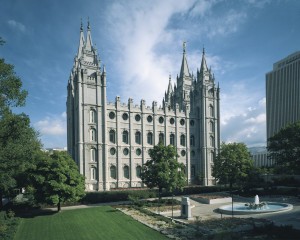
The Tabernacle, home of the famous Mormon Tabernacle Choir, was host to a Constitution Day celebration on 17 September 2010. The keynote speaker was Elder Dallin H. Oaks, an apostle for The Church of Jesus Christ of Latter-day Saints. However, he was speaking that day not as a religious leader but as an expert on constitutional law. Elder Oaks helped to revise the Illinois state constitution, worked as a law professor, and served as a state supreme court justice prior to becoming a Mormon apostle.

Elder Oaks addressed the world-wide importance of the Constitution of the United States, which has been used as a model for constitutions world-wide. He pointed out that when we weaken our own constitution, we also weaken the foundations of other nations as well, for this reason.

He cautioned listeners not to use the constitution as a weapon to end debate, but as a tool to begin it. “A public policy or a proposed law that is unwise is not necessarily unconstitutional. Even if it is a stupid proposal, it is not necessarily unconstitutional. A constitution gives the people and their elected leaders the opportunity to make many decisions that are unwise or even reckless. When that happens — when the government or one of its officials engages in some kind of action that we consider to be wrong — we should engage in vigorous public debate about it. But we should not use up a constitution by attempting to strike down every ill-conceived act of government or to discredit every unwise official. A constitution is the ultimate weapon, and we preserve that weapon best by using it sparingly and carefully. If we call some action unconstitutional, we should be prepared to explain what provision or principle of a constitution it violates. In this way, a constitution can be used to stimulate discussion and to seek unity” (Fundamentals of Our Constitutions” – Elder Dallin H. Oaks) (more…)

Religious Tolerance: 11th Article of Faith

Friday, September 10th, 2010

Mormons have a long history of coping with religious intolerance. From their earliest days, they were persecuted and chased out of the places they lived. They were the only religious group with a government-issued extermination order (from the state of Missouri).

Mormon temples remind Mormons to respect that which is sacred in any religion.

Over the years, as they have gained safety and a measure of acceptance, they have joined their voices with others to promote religious tolerance for other groups, including respect for that which a religion might consider sacred. (more…)

Learn About Mormons Online

Monday, June 14th, 2010

Today, when people want to learn about something, they frequently turn to the Internet for information. Of course, that can be an overwhelming experience when a search engine returns thousands of places to search for that information.

A responsible researcher knows that sources are not equally reliable. Anyone can post on the Internet, and while that is a wonderful thing, it also means there are more opportunities for people to intentionally or unintentionally mislead others. (more…)

Dallin H. Oaks Speaks at Harvard Law School

Monday, March 8th, 2010

Elder Dallin H. Oaks, member of the Quorum of the Twelve apostles, spoke at Harvard Law School on 26 February 2010. This speech was part of the annual Mormonism 101 series. In the talk, Elder Oaks addressed a number of basic

principles of Mormonism, explaining that a survey showed few people really knew anything at all about Mormons, and what they did know was wrong or misunderstood. (more…)