Faith Archive
Personal Response by Bethany
Yes! You can have faith and still believe in science. The scriptures clearly and repeatedly verify that God is the Creator of the earth, the heavens, and all things that are in them. They also attest that the elements of which the earth consists of are eternal. As a current biology major I am constantly tying science and religion together as I continually study the science of life and its spiritual connection with religion. As I increase my studies, my faith also increases as I see the hand of God in every aspect of life.
Elder Henry B. Eyring of the Church of Jesus Christ of Latter-day Saints stated that, “the essence of the gospel is the doctrine of trying…and that, of course, is the essence of science, also: the doctrine of trying, testing, and proving. That’s the kind of procedure that makes science what it is.” The point is that the gospel teaches us to experiment with the words... Read the rest of this entry »
This question is often asked by people who prayed for something they didn’t get or who didn’t feel they received the comfort or help they expected during difficult times. There are several aspects of the gospel that must be understood in order to know why this happened.
It’s important to remember we can’t control God, particularly not without incurring great suffering. Early in Mormon Church history, Joseph Smith‘s scribe wanted to take the translation of the Book of Mormon-116 pages so far-to show his family. Joseph prayed and was told not to allow it. However, the scribe continued to plead, and Joseph gave in and continued to ask God to change His mind. Eventually, God told them to go ahead, since they were clearly determined to do it, anyway. The scribe took the manuscript home and it was stolen. Both men realized they needed to repent for their decisions. From this, Joseph Smith learned not to nag God. God is perfect... Read the rest of this entry »
This question is related to Karl Marx’s famous statement that “Religion is the opium of the masses.” Marx also said, “Religion is the impotence of the human mind to deal with occurrences it cannot understand.” And again, “The first requisite for the happiness of the people is the abolition of religion.”
In an article written by Geoffrey Janes addressing this question, Janes insightfully said: “The basic idea is that God is some kind of spiritual narcotic that dulls our senses to the pain of the world and helps us to cope with it.” Quoting from a contemporary Polish poet, Janes went on to say, “Religion, opium of the people! The true opium of modernity is the belief that there is no God so humans are free to do precisely as they please.”Opium is a narcotic. “The term narcotic (ναρκωτικός) is believed to have been coined by Galen to refer to agents that benumb or deaden, causing loss of... Read the rest of this entry »
Personal Response by Lance
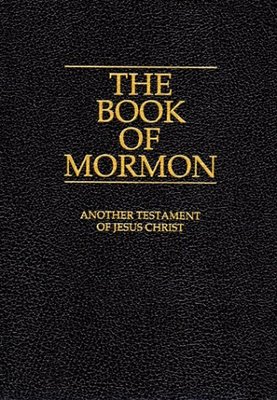
I have known for a long time that the Book of Mormon is the word of God, but only in the last couple of years, while serving as a Mormon missionary, was I finally able to put into words the way that my answer came. There is a promise given by Moroni at the end of the Book of Mormon that if a person reads, ponders, and prays to know the Book of Mormon is true, the truth will be manifest to them by the power of the Holy Ghost. (See Moroni 10:3-5)
I read the Book of Mormon a few times growing up and I always felt that it was true, but I could never clearly express how I had come to that knowledge. I could honestly say that I knew by the power of the Holy Ghost that the Book of Mormon is the word of God, but I couldn’t describe what that meant. It was more than just a simple feeling. It was a strong conviction.
As a missionary I came across people who had highly varying beliefs about the Holy Ghost and the way that the... Read the rest of this entry »
Personal Response by Nathan
Answers to prayers come in many different ways. A good way to answer this question may be to explain some of the generic ways prayers are answered.
There is a method of seeking revelation (communication from God to man) that allows prayers to be answered. Seeking revelation correctly begins through effort on our part. A simple prayer is often not enough. Important steps to consider are fasting, pondering, and building faith to accept an answer. As we fulfill these steps, God will see our efforts and bless us accordingly. Often the best method of seeking revelation or answers to prayers is to make a tentative decision after our fasting, pondering, and faith building. Once we feel we have a good preliminary decision, we take the decision to the Lord and ask for His confirmation. Read the rest of this entry »
Read More →
Personal response by Jack
At age 50 I was body surfing with my 16-year-old son and his friend at Laguna Beach, California. I took one “last wave” and accidentally hit by forehead on a submerged rock, my neck was broken, and my spinal cords severed between the second and third cervical vertebrae. I was instantly paralyzed, lost consciousness, and woke up two hours later in the Laguna hospital surrounded by doctors and nurses. One of the nurses noticed my eyes were opened and said to me, “Jack, if you can understand what I am saying, blink your eyes once.” I blinked and there was a collective sigh of relief in the room. That began for me a new way of life that has continued on for the past 19 years.
Read the rest of this entry »
Read More →
Personal response by Jack
This is a very good and thought-provoking question. I would imagine that many people, at one time or another, have felt that perhaps there is a major conflict between science and religion. The age of the earth, how it was created, evolution, the dinosaurs, and a host of other seemingly knotty questions seem to preclude having faith in God and accepting evidence gleaned from the scientific method of discovering truth.
I just recently read a most fascinating book that for some reason I had missed over the years that helped me make sense out of this supposed science vs. religion conflict. It is Reflections of a Scientist by Henry Eyring. The book was published in 1983 and may be difficult to find but is well worth reading if you can find it.
Henry Eyring was a world renowned chemist who taught for a number of years at Princeton during the late 30s and through World War II. Albert Einstein was also on the faculty and they shared... Read the rest of this entry »
Personal Response by Jack Rushton
I believe this is a very profound question that has undoubtedly been asked by millions of people from the beginning of time. Life can seem unfair at times as we experience our own personal suffering, and witness through our own eyes or through the media, the incredible suffering that seems to be such an integral part of the daily lives of people all over the world.
I had to come to grips with this question on a personal level when 19 years ago I broke my neck, severed my spinal cord, and became paralyzed from the neck down and ventilator dependent. Read the rest of this entry »
Read More →
Personal Response by Nathaniel
Friends of other faiths have asked me why I wanted to go on a Mormon mission in the prime of my life. I was 23 years old, and most of my high-school friends had already graduated from college. My motivation for going on a mission for the Church of Jesus Christ of Latter-day Saints (the Mormon Church) stemmed not only from my parents’ encouragement but a conviction that a mission would draw me closer to God.
Read the rest of this entry »
Read More →
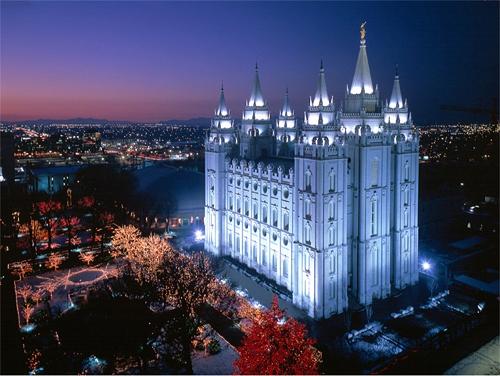
The Mormon temple includes the pinnacle of all of the ordinances that are performed in The Church of Jesus Christ of Latter-day Saints (LDS Church). One of these ordinances is temple marriage. Temple marriage is an ordinance, or a ceremony, that is performed by qualified officiators in the Mormon temple. It is similar to a wedding ceremony that is performed in a church, a synagogue, or even a Japanese shrine, with some notable exceptions. In the above ceremonies, the couple exchanges vows with one another, in the presence of witnesses and an officiator. In the Mormon temple, the couple also exchanges vows in the presence of an officiator, also known as a sealer, and two witnesses. However, Mormons also believe that God is party to these vows. These vows are known as covenants because of their sacred nature, and because they are a symbol of a relationship of commitment between God and the marriage partners. When performed by a sealer who possesses the... Read the rest of this entry »